How to Turn an Inktober-Style Challenge Into a Strong Portfolio Series

An Inktober-style challenge becomes portfolio-worthy when you treat it as a focused visual project, not just a daily posting habit. The strongest series starts with a clear theme, a repeatable production system, and a final edit that removes weaker pieces before clients, schools, or art…
An Inktober-style challenge becomes portfolio-worthy when you treat it as a focused visual project, not just a daily posting habit. The strongest series starts with a clear theme, a repeatable production system, and a final edit that removes weaker pieces before clients, schools, or art directors see it.
At a Glance: From Daily Drawings to Cohesive Work
A drawing challenge can help you build discipline, but discipline alone does not make a portfolio. Your goal is to create a body of work that proves consistency, decision-making, visual range, and finishing judgment.
The official Inktober rules and prompts keep the challenge simple: make art, post it if you want, and repeat. That open structure is useful, but it also means artists must supply the professional frame themselves. Instead of asking, “Can I finish 31 pieces?” ask, “What should these pieces prove when placed together?”
Choose a Portfolio Problem Before Choosing Prompts
Start with a narrow creative brief. A portfolio series might show editorial spot illustrations, creature design, book interiors, tarot-style images, packaging icons, character emotions, architectural ink studies, or black-and-white narrative scenes. The brief should define subject, audience, format, and visual constraint.
For example, “31 spooky houses” is a topic. “31 black-ink editorial illustrations about haunted domestic spaces, designed for magazine culture pages” is a portfolio direction. The second version gives you a client context, mood, and use case.
This is the same kind of intentional framing that helps creators in other visual formats. If you are working across social layouts later, How vertical video changes composition, thumbnails, and storyboarding can help you see how format choices influence composition before you make the artwork.
Build a System You Can Sustain
Many challenge attempts fail because the artist plans for inspiration instead of production. Decide your tools, canvas size, scan method, posting cadence, caption format, and file naming before day one. Keep the rules small enough to survive a busy week.
A strong system might include:
- one thumbnail sketch the night before;
- one main drawing window of 45 to 90 minutes;
- one limited brush or pen set;
- one repeatable scan or photo setup;
- one weekly review session to spot patterns and fix drift.
The University for the Creative Arts describes an illustration portfolio as a way to show both talent and creative journey in its portfolio guidance. That distinction matters. Process, iteration, and selection can be as persuasive as finished images, especially for students and emerging illustrators.
Create Variation Without Breaking the Series
A portfolio series needs unity, but it should not look like the same drawing repeated. You can vary viewpoint, scale, emotional tone, density, character pose, lighting, or storytelling beat while keeping the same medium and theme.
| Series element | Keep consistent | Vary intentionally |
|---|---|---|
| Medium | Ink, brush style, paper tone | Line weight and texture |
| Subject | Shared theme or world | Characters, objects, scenes |
| Format | Aspect ratio or final size | Cropping and focal point |
| Mood | Overall genre or atmosphere | Tension, humor, stillness |
A useful test is to view all pieces as thumbnails. If they blur together, add stronger contrasts. If they look unrelated, reduce your variables.
Edit Ruthlessly After the Challenge
Do not put all 31 drawings in your portfolio just because you completed them. Completion is a personal milestone. A portfolio is a public argument for your taste and skill. Select the strongest 8 to 12 pieces, then revise them as a set.
Ask which pieces show the cleanest idea, the best silhouette, the clearest value structure, the most confident line, and the strongest fit for your target audience. Remove pieces that need long explanations. Art directors and reviewers often make quick judgments, so your series should communicate clearly at first glance.
If you need feedback before the final edit, communities built for critique can help. The Society of Illustrators provides a professional ecosystem around the art form, and browsing organizations like the society of illustrators can also help you understand how polished illustration is presented. For animation-focused feedback spaces, best online communities for feedback on animation Tests and Reels offers a useful comparison.
Turn the Series Into a Presentation
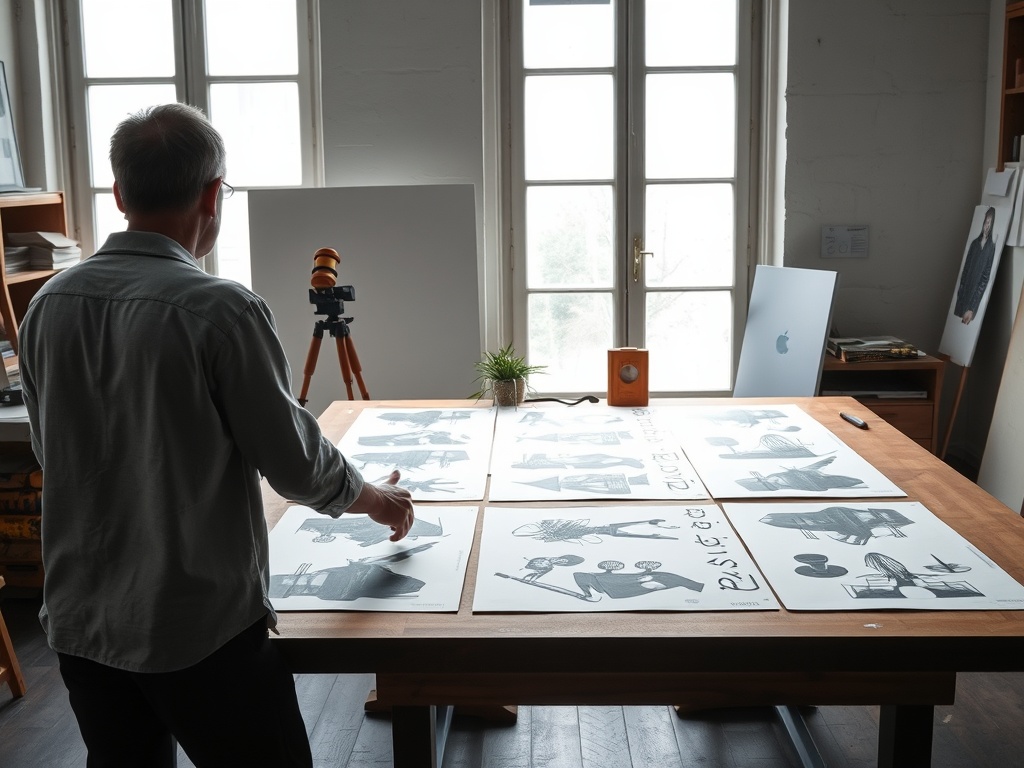
Once you have the final set, create a clean project page. Add a one-sentence brief, a short process note, and 2 to 4 process images only if they strengthen the story. Do not overexplain every drawing. Use titles or captions only when they clarify the concept.
For professional use, export web images, high-resolution images, and a compact PDF. Name files cleanly. If you are pitching editorial work, group pieces by possible use: opener image, spot illustration, social crop, and supporting detail. If you are applying to school, include a few thumbnails and roughs to show development.
Common Mistakes That Weaken the Result
The biggest mistake is treating public posting as the end product. Another is chasing every prompt literally, which can produce a scattered series. Artists also hurt themselves by keeping weak drawings for sentimental reasons, changing style too often, or using a challenge hashtag in a way that obscures their own project identity.
Be cautious with trademarked challenge names when selling products or promoting commercial services. If you are using an official challenge structure, read its current rules and trademark guidance before merchandising.
A Portfolio Series Worth Keeping
A challenge is useful when it teaches you how you work under constraints. A portfolio series is useful when it shows someone else why your work fits a real creative need. Set the brief, protect the system, edit without guilt, and present the final work as a designed project rather than a posting archive.
To keep developing the series after the final drawing, connect it to adjacent skills such as exhibition lending context in How insurance works for collectors Lending Art to Exhibitions or video presentation thinking in how vertical video changes Composition, Thumbnails, and Storyboarding.

Laura Friedman
<b>Location:</b> Boulder, Colorado Laura Friedman is a clean energy entrepreneur and climate tech advisor who has spent her career at the intersection of technology and sustainability. Based in Boulder, a hub for climate innovation, Laura has founded and advised companies in solar energy, battery storage, and carbon capture. Her writing at Nano Write covers the technologies and business models that are driving the transition to a low-carbon economy, from new materials and manufacturing processes to policy and investment trends. Laura holds a Master's in Energy Engineering and is a recognized thought leader in the clean energy space. She believes that innovation is the key to solving the climate crisis and her articles highlight the companies, technologies, and leaders making a difference. Laura is also an avid climber and skier who finds inspiration in the natural world.
More from Laura