A Beginner FAQ on Deck and Patio Setup

A good deck or patio starts with function and safety before furniture and decor. Define how the space will be used, verify structural and code requirements, plan comfortable circulation, then add seating, shade, lighting, storage, and planting that fit the available area. TL;DR Decide how…
A good deck or patio starts with function and safety before furniture and decor. Define how the space will be used, verify structural and code requirements, plan comfortable circulation, then add seating, shade, lighting, storage, and planting that fit the available area.
TL;DR
- Decide how many people and activities the space must support before buying furniture.
- Confirm deck structure, railings, stairs, permits, and load-sensitive additions with qualified guidance.
- Leave clear walking routes between doors, stairs, cooking areas, and seating.
- Choose outdoor furniture and finishes for local exposure, maintenance, and storage realities.
- Treat fire, electrical, gas, hot-tub, and structural changes as safety decisions, not styling details.
What Should I Plan First?
Start with use. A patio for two people drinking coffee needs a different layout from a deck used for family meals, grilling, or large gatherings. Write down the main activities, typical number of users, and any fixed constraints such as doors, stairs, railings, utility equipment, drainage paths, or views.
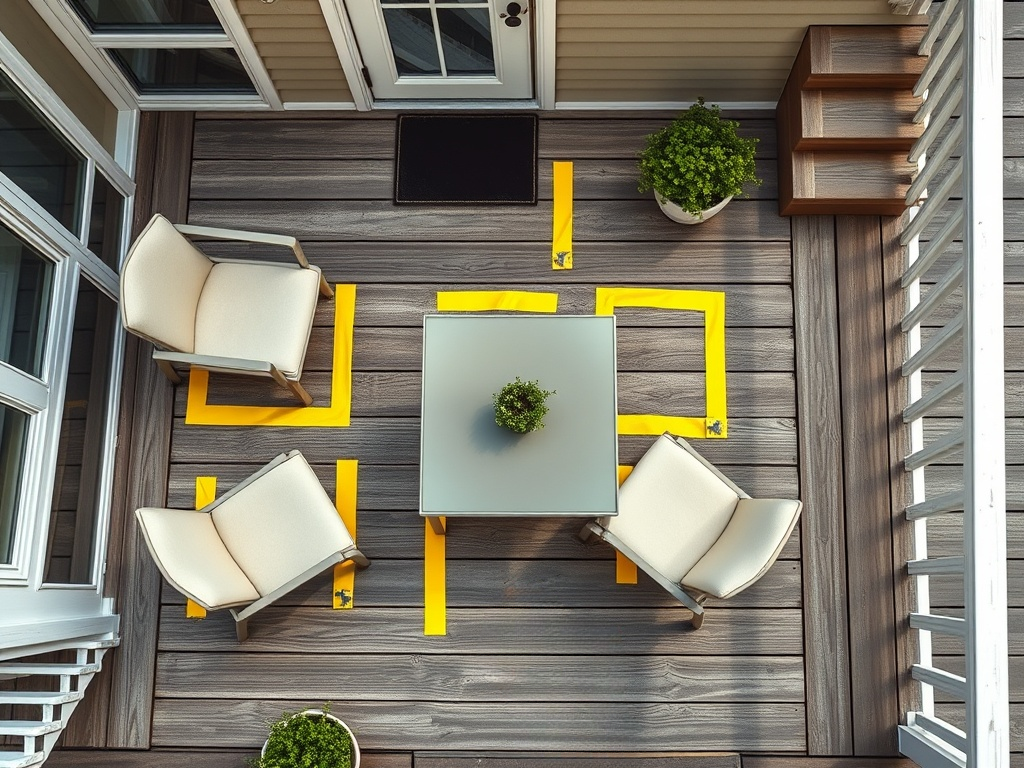
Measure the space before shopping. Mark furniture footprints with painter’s tape, cardboard, or outdoor-safe markers so you can test circulation. Include the room needed to pull out dining chairs, open doors, reach storage, and move around occupied seating.
If the wider yard also needs work, address grading, drainage, and major planting before filling the outdoor room. How to refresh an outdated landscape without starting over explains a phased order that keeps new decorative work from being disturbed by later repairs.
Do I Need a Permit for a Deck or Patio?
Permit requirements depend on jurisdiction and project scope. A ground-level patio may be treated differently from an elevated deck, covered structure, retaining wall, electrical installation, or gas line. Never assume that a project is exempt because a similar project elsewhere did not require a permit.
For residential wood decks, the American Wood Council provides technical resources, including the DCA 6 prescriptive residential wood deck construction guide, while emphasizing code-based design considerations (American Wood Council deck resources). Local building officials remain the source for applicable permits, setbacks, inspections, and code editions.
Existing decks should be inspected for signs of decay, corrosion, loose connections, unstable railings, damaged stairs, or movement before you add heavy furnishings. If structural condition is uncertain, use a qualified professional.
How Much Space Should I Leave Around Furniture?
Prioritize the main circulation path first. Secondary tables, planters, and accessories should fit around that path rather than forcing users to squeeze between objects.
Where Should a Grill or Outdoor Cooker Go?
Follow the appliance manufacturer’s clearance, ventilation, fuel, and surface requirements. Keep grills away from combustible materials as directed, and do not place them where smoke or heat will be trapped under an unsuitable roof or directed into open windows and doors.
Local fire codes, HOA rules, and multifamily building policies can restrict grills on balconies, decks, or near structures. These rules vary, so verify them before purchase. Never use a fuel-burning grill in an enclosed indoor space.
Create a stable work zone with room for the cook to operate without blocking a main walkway. Keep children’s play routes and seating away from the hot zone.
What Kind of Shade Works Best?
The answer depends on sun angle, wind, structure, budget, and permanence. A movable umbrella offers flexibility, while a pergola, retractable awning, or roof can provide broader coverage but may require structural attachment and permits.
Wind matters. Large umbrellas and shade sails can create significant forces, and improvised anchoring can fail. Follow manufacturer requirements and structural guidance. In storm-prone areas, choose systems that can be closed or removed and stored safely.
Trees can provide valuable shade, but roots, falling limbs, mature canopy size, and leaf litter affect placement. Do not build around a tree in a way that damages the trunk or root flare.
What Outdoor Lighting Do I Need?
Use layers rather than maximum brightness. Task lighting can support cooking or steps; low-level ambient lighting can help with circulation; focused accent lighting can highlight planting without flooding neighboring properties.
Outdoor electrical equipment should be listed and installed for the location and exposure. Receptacles, wiring, transformers, and fixtures may be subject to electrical-code requirements and ground-fault protection. If new wiring is needed, use a qualified electrician and local permit process.
Solar lights can work for decorative or low-output applications, but performance depends on sun exposure, battery quality, and season. They should not be assumed to replace code-required safety lighting.
How Do I Choose Furniture That Lasts?
Match material to weather and maintenance tolerance. Powder-coated metal, aluminum, wood, synthetic wicker, and recycled-plastic furniture all have different weights, heat behavior, weathering patterns, and cleaning needs.
Try seating before buying when possible. Seat depth, arm height, cushion firmness, and table height affect comfort more than appearance alone. Check whether cushions need dry storage and whether furniture can be moved or secured during high winds.
Buying fewer durable pieces can be more practical than filling the space immediately. The same logic applies to tools and accessories; the biggest garden tool buying mistakes homeowners make offers a useful framework for deciding what deserves permanent storage.
Can I Put a Hot Tub on a Deck?
Do not assume an existing deck can support a filled hot tub. Water, occupants, and the tub itself can create substantial loads concentrated in a relatively small area. Structural capacity must be evaluated for the specific deck and installation.
Electrical supply, disconnects, bonding, clearances, barriers, drainage, and local permits may also apply. This is a project for qualified structural and electrical guidance, not a furniture-layout decision.
How Should I Use Plants on a Deck or Patio?
Containers can soften hard surfaces and define zones, but choose pots and plants with mature size, weight, drainage, sun, and wind in mind. Large containers become very heavy when filled and watered. On elevated structures, placement should respect structural capacity and drainage.
Avoid letting drainage water create slippery surfaces or stain materials. Use appropriate saucers or pot feet where suitable, but do not create persistent standing water that can attract mosquitoes or damage surfaces.
Group containers by water needs to simplify care. If watering is becoming inconsistent, the beginner FAQ on lawn and garden irrigation explains soil checks and low-volume methods that can translate to container zones.
What Is the Easiest Setup for Entertaining?
Create three clear functions: a route from the house, a comfortable seating or dining area, and a service zone for food or drinks. Keep the main route unobstructed and place frequently used items within easy reach.
For flexible entertaining, use one or two movable side tables instead of crowding the perimeter with fixed pieces. Add shade and lighting before decorative accessories because comfort determines whether the space gets used.
If noise, smoke, or lighting could affect neighbors, plan with that relationship in mind. Good outdoor living design includes the surrounding property, not just the furniture footprint.
Design for Real Use, Then Add Style
A deck or patio feels finished when it is easy to enter, safe to move through, comfortable in the expected weather, and simple to maintain. Begin with structure and circulation, then choose furnishings that support the activities you actually do.
Before purchasing the final layer of decor, live with the layout for a few uses. You may discover that the best improvement is more shade, a smaller table, better task lighting, or an open corner rather than another accessory.
Informational note: Home and garden information is educational only and is not a substitute for professional horticultural, structural, electrical, fire-safety, plumbing, or legal advice. Follow local building codes, permits, HOA rules, and manufacturer instructions.

Dr. Emily Watson
Location: Princeton, New Jersey Dr. Emily Watson is a quantum computing researcher and physicist who translates complex scientific concepts into accessible insights for business and technology leaders. Based in Princeton, home to leading research institutions, Emily holds a PhD in Physics from Princeton University and has published extensively on quantum algorithms and their applications. Her writing at Nano Write covers the science and business of quantum computing, from the physics of qubits to real-world use cases in cryptography, drug discovery, and optimization. Emily believes that quantum computing will be the next major technological revolution and she is committed to preparing leaders for that transformation. Outside of her research, Emily speaks at technology summits and advises startups at the intersection of physics and commerce.
More from Dr. Emily