How to Manage Slugs and Snails Without Harsh Chemicals

You can reduce slug and snail damage without making harsh chemical controls your first move. The most reliable approach combines habitat changes, regular monitoring, hand removal, barriers or traps where useful, and protection of the plants most likely to be damaged. TL;DR Look for slugs…
You can reduce slug and snail damage without making harsh chemical controls your first move. The most reliable approach combines habitat changes, regular monitoring, hand removal, barriers or traps where useful, and protection of the plants most likely to be damaged.
TL;DR
- Look for slugs and snails at dusk, dawn, or after rain when they are active.
- Reduce cool, damp hiding places close to vulnerable plants.
- Water strategically so the soil surface is not wet all night when conditions allow.
- Hand-pick regularly and use simple traps or barriers as supporting tools.
- Protect seedlings first and tolerate minor cosmetic feeding on established plants when practical.
Confirm the Pest Before You Treat the Garden
Slugs and snails often leave irregular holes with smooth edges, rasped surfaces on fruit or leaves, and silvery slime trails. Seedlings can disappear almost completely overnight, while older plants may show only scattered cosmetic damage.
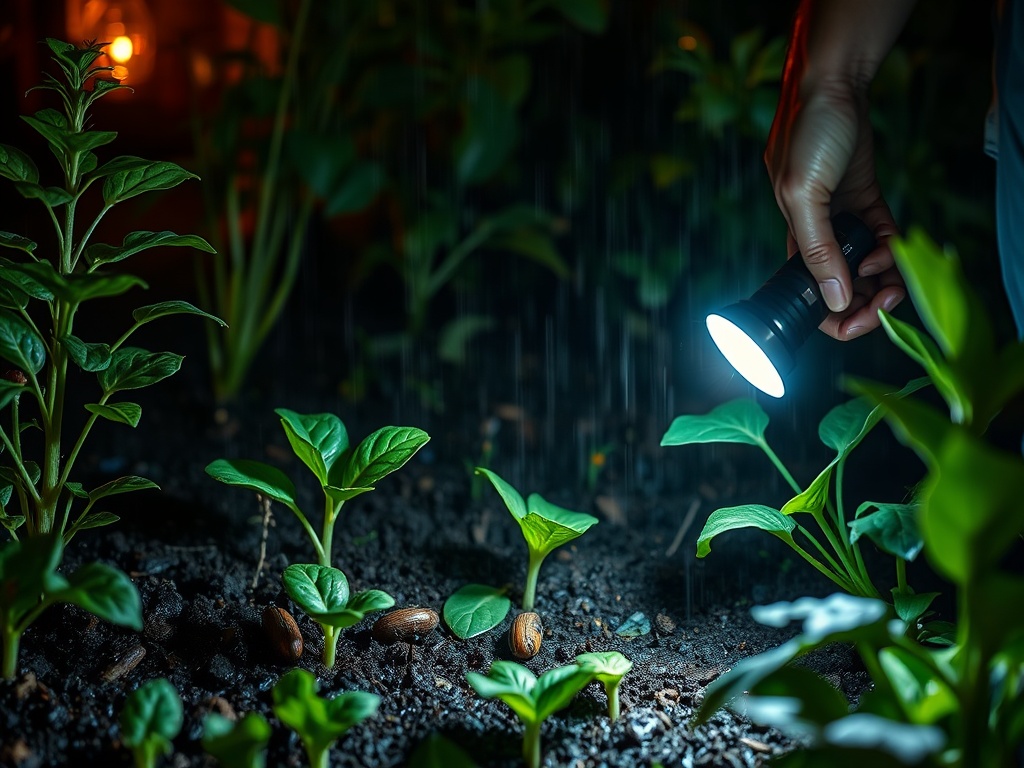
Check the garden after dark with a flashlight or early in the morning. Look under boards, pots, dense groundcover, stones, low branches, and garden debris. University of Minnesota Extension notes that slugs favor moist conditions and commonly hide in protected areas during the day (UMN Extension slug guidance).
Do not assume every hole is caused by a slug. Caterpillars, beetles, earwigs, wildlife, hail, and leaf diseases can produce different types of damage. Confirming the pest avoids spending time on controls that cannot solve the actual problem.
Make the Habitat Less Comfortable
Slugs lose moisture easily, so shaded, damp shelter helps them survive. You do not need to dry the entire garden, but you can reduce unnecessary hiding places immediately around sensitive crops.
Remove boards, overturned pots, dense piles of decaying leaves, and other debris that sits directly beside seedlings. Thin excessively dense lower growth when appropriate for the plant, and keep pathways reasonably clear. Avoid removing all organic matter from the landscape; mulch and leaf litter have soil and habitat benefits. The aim is targeted sanitation around high-value plants, not a sterile yard.
If mulch stays continually wet and slug pressure is severe, pull it slightly back from the stems of tender seedlings until plants are established. Later, restore an appropriate mulch layer while continuing to monitor.
Adjust Watering Without Stressing Plants
Evening irrigation can leave the soil surface damp during peak slug activity. When plant needs, local rules, and weather allow, morning watering gives the surface more time to dry before night.
That does not mean withholding needed water. New transplants, vegetables, and containers may require consistent moisture. Use the beginner FAQ on lawn and garden irrigation to match timing and delivery to actual root-zone needs instead of simply making the surface dry.
Drip irrigation can help place water near roots with less wetting of surrounding foliage and pathways, although leaks, clogged emitters, or overly long run times can still create damp refuges.
Hand-Picking Works Best as a Routine
For a moderate garden, repeated hand removal can substantially reduce local populations. Go out after sunset or during damp weather, wear gloves if preferred, and inspect the same hiding places each time. Use a container to collect pests and dispose of them according to local recommendations.
One session rarely solves the problem because eggs and hidden individuals remain. Consistency matters. A short check on several consecutive evenings can be more useful than an occasional large cleanup.
You can also create temporary hiding stations using boards or damp folded cardboard placed where they can be checked easily. Slugs may shelter underneath during the day, allowing you to collect them. These stations should be monitored regularly or they simply become extra habitat.

Use Traps as a Supplement, Not the Whole Plan
Beer traps are widely discussed because fermenting liquid can attract slugs. They may capture some individuals, but a few traps are unlikely to protect an entire landscape. Containers also need safe placement so pets, children, and beneficial animals are not exposed to hazards.
What About Copper, Abrasive Materials, and Other Barriers?
Copper barriers can discourage some slugs when installed as a continuous band that pests cannot easily bridge with leaves, soil, or debris. Their effectiveness varies with installation and conditions, so treat them as a targeted barrier for containers, raised beds, or particularly valuable plants rather than a garden-wide cure.
Sharp gravel, eggshells, diatomaceous earth, coffee grounds, and similar home remedies are often recommended online. Results can be inconsistent, and some materials lose their effect when wet. Avoid building a control plan around an unverified household remedy, especially if it changes soil chemistry or creates risk for pets, wildlife, or people.
EPA's integrated pest management framework recommends combining prevention, monitoring, and lower-risk controls before escalating to pesticide use (EPA IPM principles). That approach fits slug management well because no single tactic works in every garden.
Protect Seedlings and High-Value Plants First
A mature hosta with a few holes may remain healthy, while a lettuce seedling with the same amount of feeding could be lost. Prioritize plants based on vulnerability.
Start seedlings in a protected area if local conditions make outdoor losses severe. Use physical covers or collars only when they are appropriate for the crop and do not trap excessive heat or moisture. Keep leaves from touching the ground where practical, and inspect new nursery plants and pots for hidden slugs before placing them in a clean area.
For edible herbs, maintaining vigorous growth can help plants recover from minor feeding. The guide on harvesting herbs for more regrowth explains how to cut without unnecessarily reducing the foliage a plant needs for recovery.
Encourage a Diverse Garden Instead of Targeting Every Creature
Birds, ground beetles, frogs, toads, and other animals may feed on slugs or their eggs, depending on the region and habitat. A diverse garden with shelter and appropriate plantings can support these predators, but do not introduce animals solely for pest control without understanding ecological and local implications.
Avoid broad-spectrum treatments that can harm non-target organisms. If slug pressure remains unacceptable after cultural and physical controls, identify products specifically labeled for the site and pest, then follow the label exactly. "Natural" does not automatically mean harmless, and pesticide regulations differ by jurisdiction.
Troubleshoot Recurring Slug Damage
Damage returns after every rain
Moist weather naturally increases activity. Increase monitoring during those periods and inspect shelter sites. Focus on seedlings and newly transplanted plants rather than attempting to eliminate every slug in the property.
Slugs are concentrated near compost or dense mulch
Organic matter can provide food and shelter. Keep active compost contained and appropriately managed. If indoor composting is an option for kitchen scraps, starting a vermicomposting bin indoors can move some decomposing material away from vulnerable beds while producing useful castings.
Leaves are damaged but no slugs appear
Check at a different time of day and verify the damage pattern. Do not keep adding slug controls when another pest or environmental problem may be responsible.
Aim for Tolerable Damage Rather Than a Sterile Garden
A realistic goal is to keep slug and snail feeding below the level that threatens plant health or harvests. Some cosmetic damage can coexist with a healthy, biologically active garden.
Build the routine around observation: remove shelters close to vulnerable plants, water thoughtfully, hand-pick during active periods, and use barriers or traps where they solve a specific problem. If those measures are not enough, seek local extension advice before escalating control.
Informational note: Home and garden information is educational only and is not a substitute for professional horticultural, pest-control, structural, electrical, or legal advice. Any pesticide or pest-control product must be used according to its current label and local regulations.

Dr. Emily Watson
Location: Princeton, New Jersey Dr. Emily Watson is a quantum computing researcher and physicist who translates complex scientific concepts into accessible insights for business and technology leaders. Based in Princeton, home to leading research institutions, Emily holds a PhD in Physics from Princeton University and has published extensively on quantum algorithms and their applications. Her writing at Nano Write covers the science and business of quantum computing, from the physics of qubits to real-world use cases in cryptography, drug discovery, and optimization. Emily believes that quantum computing will be the next major technological revolution and she is committed to preparing leaders for that transformation. Outside of her research, Emily speaks at technology summits and advises startups at the intersection of physics and commerce.
More from Dr. Emily