How to Plan Hotel and Resort Stays for Different Traveler Types

Planning a hotel or resort stay becomes easier when travelers separate universal booking needs from profile-specific needs. Everyone needs accurate dates, a suitable location, clear pricing, and workable cancellation terms, but couples, families, groups, solo travelers, and business guests often define convenience very differently. The…
Planning a hotel or resort stay becomes easier when travelers separate universal booking needs from profile-specific needs. Everyone needs accurate dates, a suitable location, clear pricing, and workable cancellation terms, but couples, families, groups, solo travelers, and business guests often define convenience very differently.
The Planning Snapshot
- Write down the trip purpose, non-negotiables, and realistic daily pace before opening a booking site.
- Compare total trip cost and policy terms, not only the advertised nightly rate.
- Choose a room type and location that remove predictable friction for the people on the trip.
Start With Constraints, Then Add Preferences
A useful planning order is destination and dates first, traveler needs second, property type third, and amenities last. This prevents an appealing pool, view, or promotion from distracting from issues that matter more, such as travel time to the main purpose of the trip, sleeping arrangements, accessibility, parking, or the ability to cancel. List constraints as things that would make a property unworkable; list preferences as features that would simply improve the stay.
Price comparison also needs a consistent basis. In the United States, the FTC’s rule on unfair or deceptive fees requires covered short-term lodging sellers that display prices to show the total price including mandatory fees that can be calculated upfront, with limited exclusions such as government charges. Travelers should still review the final amount, refund conditions, deposits, and optional add-ons before paying because the lowest visible rate is not the only cost that affects a trip.
Plan Differently for Each Traveler Profile
Couples: Decide What the Stay Is Supposed to Feel Like
A couple planning a short escape may place atmosphere and privacy high on the list, while a couple visiting relatives may care more about location and flexible check-in. Decide how much time will actually be spent at the property. If most of the day will be outside, paying for extensive on-site facilities may add little value. If the hotel is the trip, room comfort, dining access, quiet spaces, and on-property activities deserve more weight.
Families: Plan the Boring Parts on Purpose
Family trips benefit from planning details that rarely appear in promotional photography. Confirm the actual bed configuration, room occupancy rules, bathroom layout, refrigerator or food-storage options, laundry access, elevator routes, stroller practicality, and the distance from the room to breakfast, parking, pools, or transit. A slightly less glamorous hotel can be a better fit when it makes feeding, resting, changing clothes, and getting out the door easier.
For U.S. air travel, parents can also reduce pre-trip uncertainty by checking the TSA identification guidance, which notes that children under 18 generally do not need identification for domestic security screening, while airlines may have their own requirements. The larger lesson is to verify each provider’s rules instead of assuming hotel, airline, and destination requirements are identical.
Groups: Agree on the Decision Rules Before Shopping
Group planning can stall when everyone rates properties using different criteria. Establish a budget range, minimum room standard, preferred neighborhood, and two or three shared priorities before comparing options. Assign one person to track deadlines and another to collect rooming information. If people are paying separately, confirm whether each room can be reserved independently and what happens if part of the group cancels.
Solo and Business Travelers: Optimize for Time and Certainty
Solo travelers may value a well-connected location, staffed arrival periods, simple transport, and flexible activity choices. Business travelers usually need predictable connectivity, quiet working conditions, reliable arrival logistics, and a location that keeps meetings manageable. A resort far from the business district can make sense for a bleisure trip, but only if the added transfer time does not create stress during the work portion.
A Traveler-Type Planning Matrix
The matrix below helps turn broad preferences into bookable requirements. Adjust the emphasis for the specific destination and reason for travel.
| Profile | Primary planning question | Room focus | Schedule style | Budget emphasis |
|---|---|---|---|---|
| Couple | What experience are we prioritizing together? | Privacy, comfort, location | Flexible with protected shared time | Spend on the features both value |
| Family | What will make daily transitions easier? | Beds, storage, access, practical layout | Predictable anchors and rest windows | Total cost plus food and transport |
| Group | What must everyone agree on? | Room proximity and common space | Shared events plus optional time | Clear split costs and deadlines |
| Solo traveler | What makes the stay simple and comfortable? | Convenient, secure-feeling access | Flexible and self-directed | Value convenience, not just low rate |
| Business guest | What keeps work reliable? | Quiet, desk setup, connectivity | Meeting-led with buffer time | Policy-compliant total trip cost |
Choose the Room as Part of the Itinerary
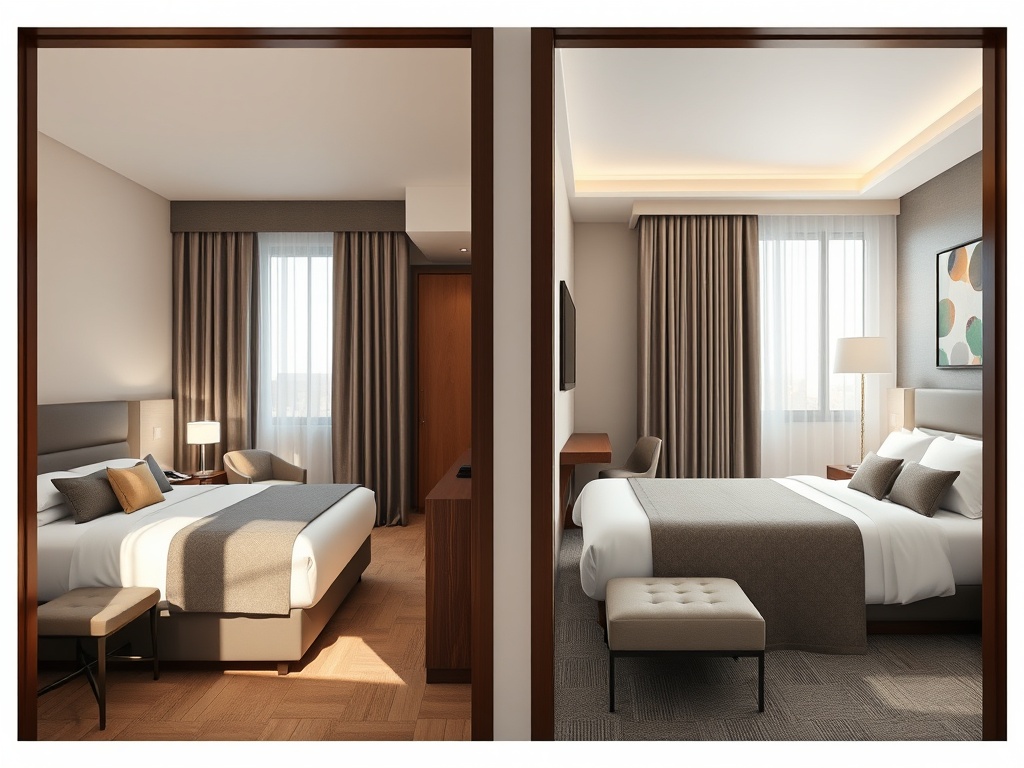
A room is not just a place to sleep; its configuration can influence how smoothly the trip runs. A family may need floor space and separation, a business guest may need a usable desk, and a couple may care more about quiet or a view. The detailed framework in choosing a hotel room for the trip type helps translate the trip purpose into room-level criteria.
When comparing categories, rely on the property’s current description and confirmation details rather than assumptions created by labels such as deluxe, premium, family, or executive. Those terms are not standardized across all hotels. Ask for dimensions, bed types, accessibility features, or location information when those details are essential.
Use Budget as a Boundary, Not the Only Filter
A strict nightly-rate filter can hide trade-offs. A cheaper property may require daily parking, long transfers, breakfast purchases, or extra room space. A higher rate may include items the traveler would otherwise pay for separately. The approach in personalizing a budget hotel stay focuses on matching savings tactics to traveler needs rather than assuming that the lowest base price is automatically the best value.
Build a simple trip total using the room, mandatory charges, taxes, transport, parking, likely meals, and any activities that are central to the trip. Keep optional purchases separate so the comparison stays honest. This also makes it easier for groups and families to decide where convenience is worth paying for.
Check the Fit One More Time Before Paying
If the shortlist includes coastal properties, use the principles in personalizing beach resort stays for different groups to account for weather exposure, water activities, and resort layout. For any destination, reread cancellation rules, occupancy limits, deposit terms, check-in requirements, and the exact room description before booking.
Move From Planning to a Confident Reservation
A professional planning process is simple: define the purpose, separate needs from wants, compare the same cost components, and verify any detail that could disrupt the trip. Once a property passes those tests, stop optimizing for every possible feature. Reserve the option that fits the travelers in front of you, save the confirmation and policy details, and keep the itinerary flexible enough to handle normal changes.

James Park
<b>Location:</b> Ann Arbor, Michigan James Park is a robotics engineer and automation specialist with a focus on industrial applications of AI and machine learning. Based in Ann Arbor, home to leading robotics research, James has worked on autonomous systems, warehouse automation, and collaborative robots for manufacturing and logistics. His writing at Nano Write covers the technology and business of robotics, from hardware design to software integration to workforce implications. James holds a degree in Mechanical Engineering and is a passionate advocate for human-robot collaboration he believes that automation should augment, not replace, human capability. His articles offer a balanced, informed perspective on the future of work in an increasingly automated world. James also mentors engineering students and competes in robot design challenges.
More from James