How to Build a Resort Schedule Around Different Traveler Types

Approx. 1118 words A resort schedule should create enough structure to protect the experiences travelers care about without turning the stay into a timetable. Couples, families, groups, solo travelers, and business guests usually need different balances of reservations, downtime, meal timing, and spontaneous choices. The…
Approx. 1118 words
A resort schedule should create enough structure to protect the experiences travelers care about without turning the stay into a timetable. Couples, families, groups, solo travelers, and business guests usually need different balances of reservations, downtime, meal timing, and spontaneous choices.
The Schedule-at-a-Glance Rule
- Book only the activities that truly require advance commitment.
- Use one or two daily anchors and keep the rest of the day flexible.
- Match the most demanding activity to the traveler’s strongest energy window and build recovery around it.
Separate Fixed Commitments From Flexible Options
Start by marking the elements that have a real time requirement: airport transfers, check-in or check-out, dining reservations, spa appointments, tours, classes, kids-club sessions, meetings, or ticketed activities. Everything else can sit in a flexible list. This prevents a resort calendar from becoming a chain of unnecessary deadlines.
Then identify the travel group’s natural rhythm. Early risers can use mornings for active or outdoor experiences. Travelers who prefer a slow start can keep breakfast and pool time loose, then schedule a late-afternoon experience. Families may need to protect naps or quiet breaks. Groups benefit from a few clear meeting times rather than constant coordination.
Build Different Rhythms for Different Travelers
Couples: Protect Shared Time Without Booking Every Hour
Couples can select one meaningful shared activity and one dining plan each day, leaving the rest open. That structure supports both connection and rest. If one person enjoys activities that the other does not, create individual windows rather than compromising on every block. The schedule should make the trip easier to enjoy, not prove that every resort feature was used.
Families: Alternate Activity and Recovery
Families often do better with a predictable cycle: active morning, lunch, rest, shorter afternoon activity, then dinner. The exact pattern depends on ages and habits. Place water activities or physically demanding sessions when children are most alert, and allow more transition time than an adult-only itinerary would need.
For pool-heavy stays, the CDC healthy swimming guidance provides safety information for pools and natural water. A schedule should never substitute for supervision or local conditions; use official and property-specific information when deciding if a water activity is appropriate on a particular day.
Groups: Use Anchors and Breakouts
A group schedule works when everyone knows which events are truly shared. One breakfast, excursion, or dinner can be an anchor; the rest can split into smaller groups. Avoid requiring unanimous decisions for low-stakes activities. If reservations have cancellation penalties or minimum party sizes, assign one organizer to track them so responsibility is clear.
Luxury or premium properties may offer more activities than any group can reasonably use. The guide to personalizing luxury stays by travel style can help decide which reservations justify a fixed place on the schedule.
Solo and Business Travelers: Keep Optionality High
Solo travelers can maintain a short list of same-day options and book only the experiences that have limited capacity. Business guests should place work commitments first, then add leisure where delays or cancellations will not create a professional problem. A bleisure day can be heavily scheduled after meetings end, but the work portion benefits from larger buffers.
A Resort Schedule Personalization Matrix
The matrix offers a default rhythm. Adjust it for weather, age, destination, and how much structure each traveler actually enjoys.
| Traveler | Best daily anchor | Flexible block | Recovery need | Scheduling mistake to avoid |
|---|---|---|---|---|
| Couple | One shared experience or dinner | Pool, beach, walk, or individual time | Unstructured private time | Booking every premium activity |
| Family | Meal plus one main activity | Play, pool, or simple on-site option | Nap or quiet reset | Too many back-to-back transitions |
| Group | One clearly shared event | Subgroup activities | Independent downtime | Forcing unanimous choices |
| Solo traveler | One reservation with real capacity limit | Self-directed exploration | Personal pace | Filling time to avoid being alone |
| Business guest | Meeting or work block | Short leisure window | Buffer for changes | Scheduling leisure too close to work |
Use Resort Layout to Set Realistic Timing
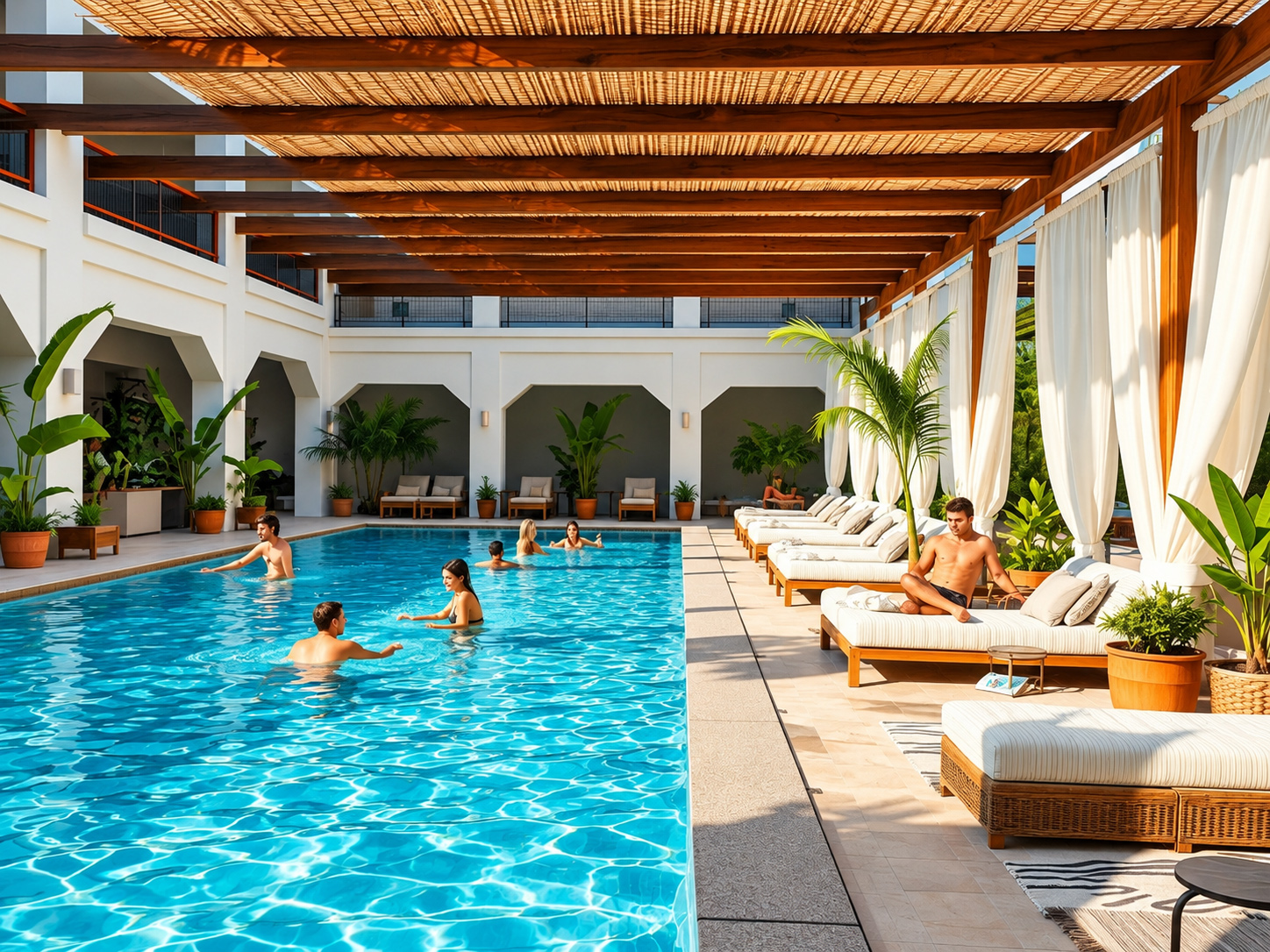
A 10:00 activity and an 11:00 lunch may look comfortable until the traveler needs 20 minutes to return to the room, change, and cross the property. Multigenerational groups can use the considerations in personalizing resorts for toddlers, teens, and grandparents to account for walking, mobility, rest, and different energy levels.
Ask the resort how guests move between major areas, whether shuttles run on fixed intervals, and how early travelers must arrive for booked activities. Those operational details are more useful than estimating from a property map alone.
Let Weather Change the Order, Not Ruin the Day
At beach resorts, storms, heat, wind, or rough water can shift outdoor plans. The National Hurricane Center hazard overview is an authoritative source for tropical cyclone hazards in affected regions. Travelers should also follow local forecasts and resort instructions, and they should avoid treating a long-range forecast as a guarantee.
The traveler-type approach in personalizing beach resort stays can help create indoor, shaded, or lower-intensity alternatives that still fit the group when weather changes.
Reserve the Scarce Experiences and Leave the Rest Open
Not every restaurant, activity, or service needs to be booked in advance. Confirm which experiences have limited capacity, meaningful cancellation penalties, or restricted operating days. Reserve those first. Keep lower-stakes choices flexible so the schedule can respond to mood, weather, fatigue, and discoveries made after arrival.
Use Meal Timing to Stabilize the Day
Meals can act as natural anchors without making the schedule feel rigid. Families may benefit from a consistent breakfast and earlier dinner, while couples may prefer a later reserved meal after an open afternoon. Groups can choose one dinner where everyone reconnects after separate activities. If a resort has limited dining capacity, reserve only the meals that matter most and keep backup options.
Allow time for changing clothes, walking between areas, showering after water activities, and waiting for resort transport. These transition minutes are easy to omit from an itinerary but are often the reason a schedule starts to feel rushed.
For longer stays, vary the intensity across days. A full excursion day can be followed by a looser resort day, while a group dinner can sit after separate daytime activities. Alternating demanding and easy periods gives travelers more room to recover and makes weather-related changes easier to absorb.
End Each Day With More Choice Than Pressure
A good resort schedule gives travelers clarity without making them feel managed. Protect essential reservations, match activity timing to energy, and leave deliberate gaps. The result is a stay that can absorb normal changes while still delivering the experiences that mattered enough to plan.

James Park
<b>Location:</b> Ann Arbor, Michigan James Park is a robotics engineer and automation specialist with a focus on industrial applications of AI and machine learning. Based in Ann Arbor, home to leading robotics research, James has worked on autonomous systems, warehouse automation, and collaborative robots for manufacturing and logistics. His writing at Nano Write covers the technology and business of robotics, from hardware design to software integration to workforce implications. James holds a degree in Mechanical Engineering and is a passionate advocate for human-robot collaboration he believes that automation should augment, not replace, human capability. His articles offer a balanced, informed perspective on the future of work in an increasingly automated world. James also mentors engineering students and competes in robot design challenges.
More from James