Choosing and Personalizing Resorts for Toddlers, Teens, and Grandparents

Approx. 1123 words Multigenerational resort trips work best when the property and schedule are designed around different energy levels, mobility needs, sleep patterns, and interests. Toddlers, teens, parents, and grandparents do not need identical experiences; they need a trip structure that lets them share meaningful…
Approx. 1123 words
Multigenerational resort trips work best when the property and schedule are designed around different energy levels, mobility needs, sleep patterns, and interests. Toddlers, teens, parents, and grandparents do not need identical experiences; they need a trip structure that lets them share meaningful time without forcing everyone into the same pace.
The Multigenerational Shortcut
- Choose the resort for easy daily movement and room practicality before adding activity variety.
- Plan shared anchors, then create age-appropriate options around them.
- Confirm water safety, accessibility, supervision rules, and transportation details directly with the property.
Design Around the Hardest Daily Transition
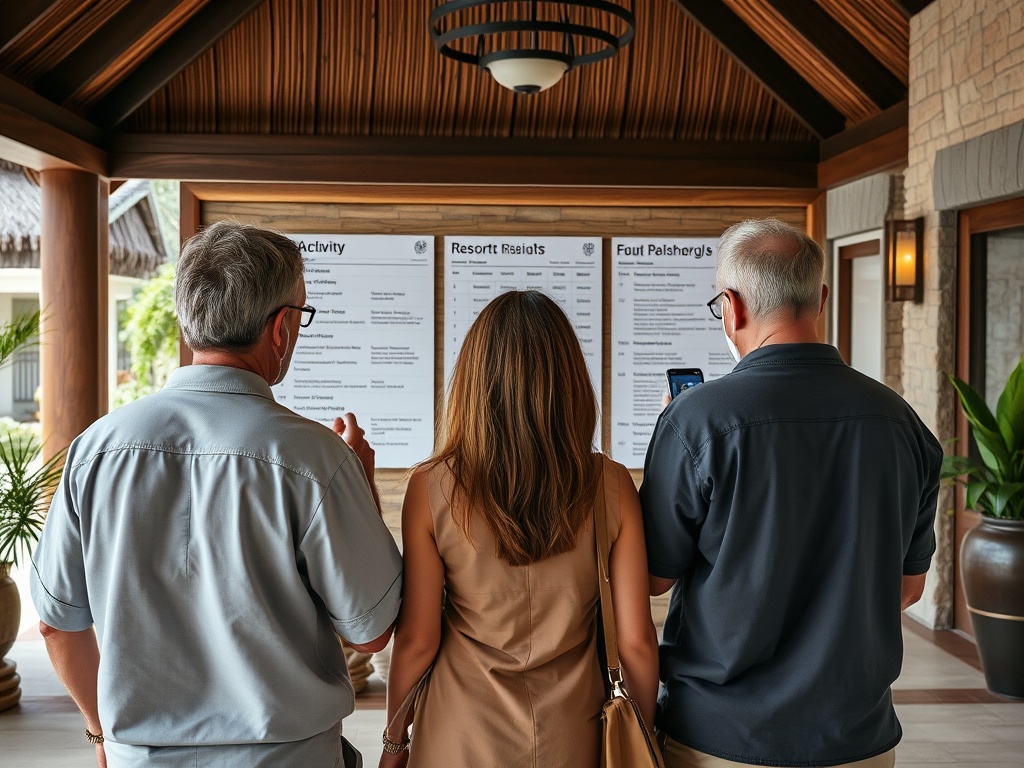
Think about the point in the day most likely to create stress. For a toddler, it may be the trip from pool to room before a nap. For a grandparent, it may be a long walk between the room and restaurant. For a teen, it may be a schedule that leaves no independent choice. A strong resort layout reduces those frictions with reasonable distances, elevators where needed, nearby restrooms, shade, seating, and clear transport between major areas.
Accessibility should be verified in concrete terms. The U.S. Department of Justice Title III lodging regulations address accessible room reservations and the identification of accessible features. Travelers who need a particular feature should ask the property to describe it and confirm the reservation rather than relying on a generic “accessible” label.
Personalize the Stay by Life Stage
Toddlers: Short Loops and Easy Resets
Toddlers often do better with short activity windows, familiar meal timing, and quick access to the room. Families can prioritize shallow-water or age-appropriate play areas, shade, high-chair availability, refrigerator access, and nearby quiet spaces. Confirm any childcare or kids-club minimum ages and supervision policies directly, because these rules vary by property and should never be assumed.
Water time deserves special planning. The CDC healthy swimming guidance emphasizes close supervision and water-safety practices for children. At a resort, that translates into checking pool depth, lifeguard information, access barriers, and the suitability of natural-water conditions before deciding how much pool or beach time to build into the day.
Teens: Give Choice Without Losing Coordination
Teens may value later starts, social spaces, sports, independent food options, and activities that feel age-appropriate rather than child-focused. Parents can establish clear check-in times and approved resort zones while allowing teens to choose between a few activities. A resort app or group message can help, but the plan should still include a physical meeting point in case devices lose power or connectivity.
Grandparents: Prioritize Comfort, Access, and Recovery
Grandparents are not a single traveler type, so avoid assuming low activity or limited mobility. Ask what pace and activities they actually want. If access matters, examine walking distances, slopes, stairs, shuttle frequency, bathroom access, shade, seating, and room location. Some grandparents may want the most active schedule in the group; personalization means designing from stated preferences and functional needs rather than age stereotypes.
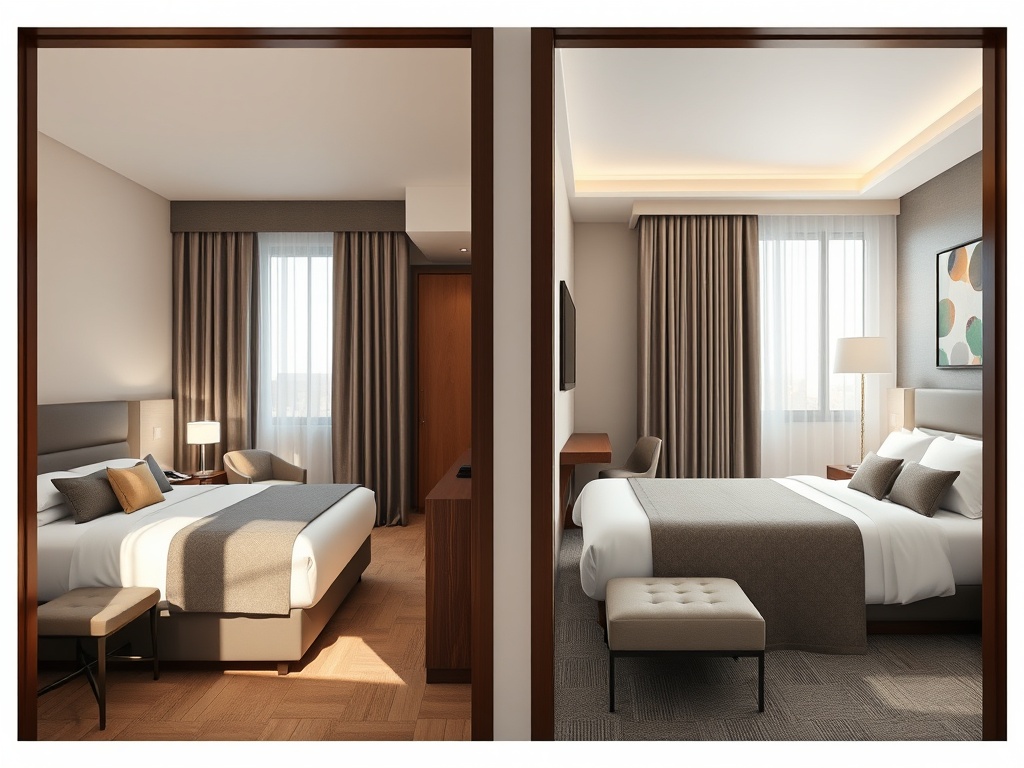
The room is often the operational center of a multigenerational trip. The guide to choosing the right room configuration can help compare adjoining rooms, suites, bed layouts, and practical in-room features.
A Multigenerational Resort Matrix
Use the matrix to identify likely needs, then replace assumptions with direct questions to each traveler and the property.
| Traveler | Room and access | Best schedule pattern | Activity approach | Confirm before booking |
|---|---|---|---|---|
| Toddler | Near key areas, space for routine | Short blocks plus naps or quiet time | Simple, supervised, repeatable | Childcare ages, crib, pool access |
| Teen | Some privacy and charging space | Later flexibility with check-ins | Choice among social or active options | Age limits, activity reservations |
| Parent/caregiver | Easy logistics and storage | Shared anchors plus reset time | Mix of family and individual time | Laundry, food storage, room layout |
| Grandparent | Access matched to stated needs | Pace chosen by the traveler | Interest-led, not age-assumed | Walking distances, mobility features |
| Whole group | Convenient meeting point | One or two shared events daily | Optional branches around anchors | Transport and dining capacity |
Build a Schedule That Allows People to Separate
A family resort day does not need to keep every person together from breakfast to bedtime. Use the method in building resort schedules by traveler type to create shared meals or activities and protected blocks where smaller groups can follow their own pace.
A practical pattern is one shared morning or evening anchor, one flexible activity period, and one recovery period. Rotate who gets priority on different days. This makes the trip feel fairer and reduces the pressure to compromise on every choice at the same time.
Make Beach and Pool Resorts Easier for Mixed Ages
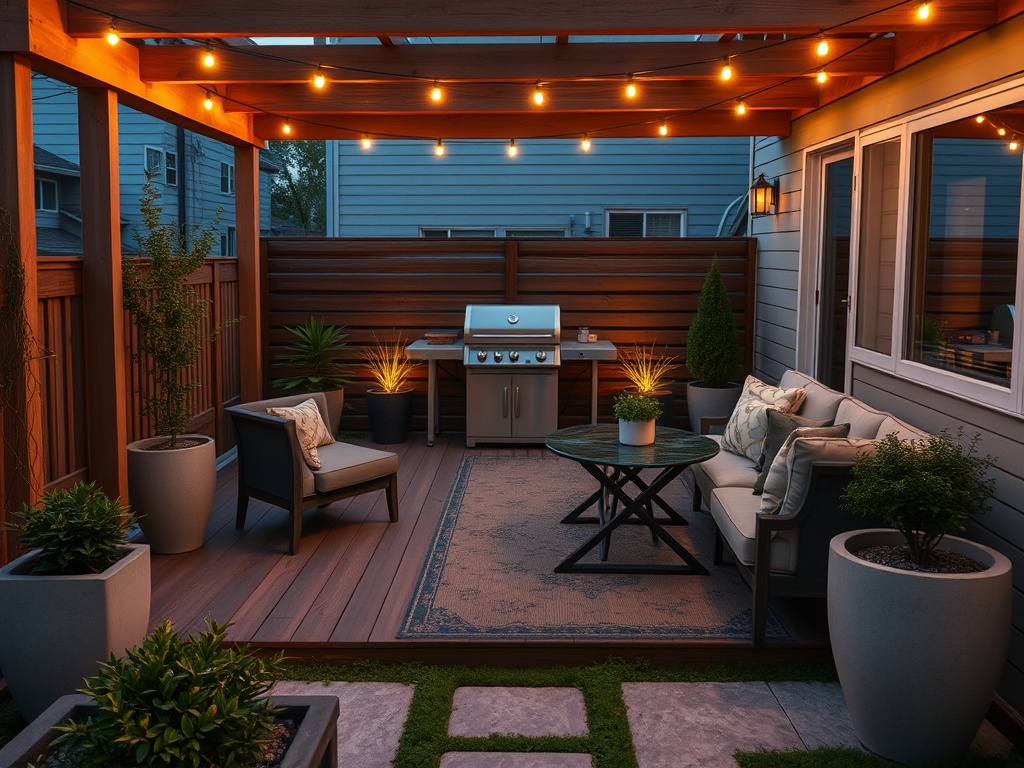
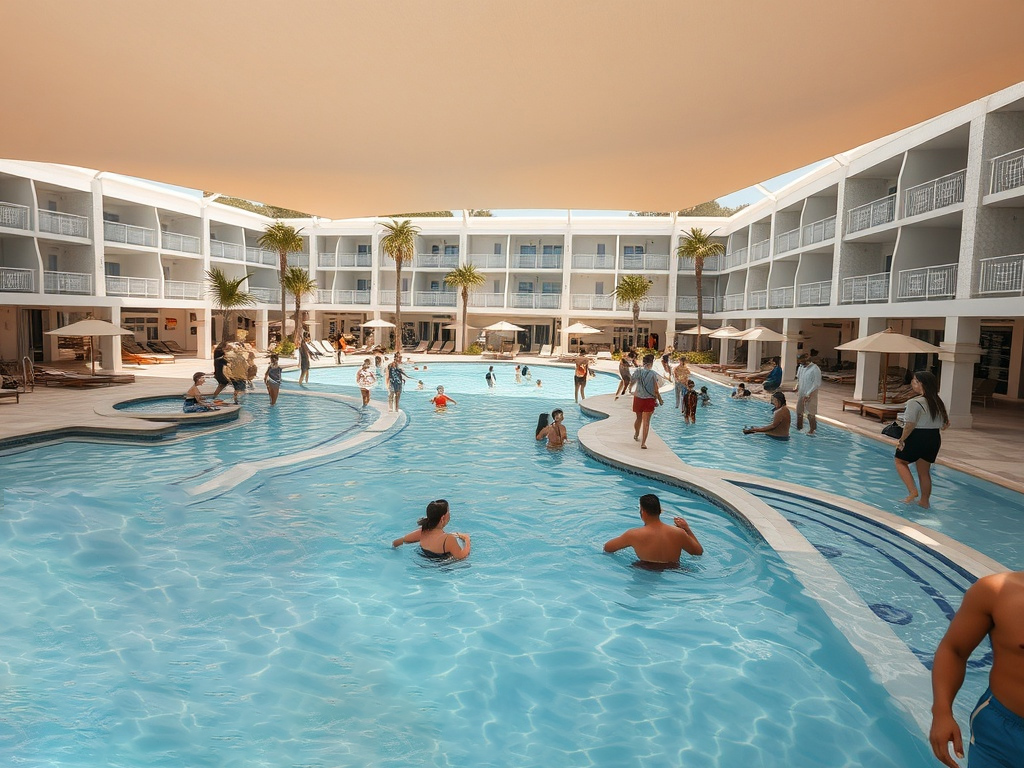
If the trip centers on water, personalizing beach resort stays adds useful questions about room location, shade, water access, storm-season planning, and activity timing. Multigenerational groups often benefit from choosing a property where some people can enjoy the view or social areas without having to participate in every water activity.
Use Travel Rules to Reduce Departure-Day Surprises
For U.S. domestic air screening, the TSA identification page states that children under 18 generally are not required to provide ID at the security checkpoint, although airlines can have their own requirements. Families should verify airline policies, passports or destination documents for international travel, and any consent documentation that may apply to their situation.
Plan Meals as a Coordination Tool
Meals are often the easiest shared anchors on a multigenerational trip, but they can also create friction when dietary needs, children’s schedules, and different appetites collide. Review restaurant hours, reservation rules, buffet or à la carte options, room-service availability, and how far dining is from the rooms. One flexible meal each day can reduce pressure if an activity runs late or someone needs extra rest.
If allergies or medically required diets are involved, contact the property directly and ask how requests are handled. Do not assume that a general “healthy,” “family-friendly,” or “all-inclusive” description answers a specific dietary question.
Room-sharing choices also deserve an explicit family discussion. Some relatives may value privacy more than proximity, while others may prefer connecting rooms for childcare or mobility reasons. Clarifying that preference before booking can prevent an expensive last-minute room change and can make the final resort choice feel fair across generations.
Create a Resort Plan the Whole Family Can Use
Choose the resort that makes movement, rest, meals, and coordination straightforward for the actual people in the group. Then build the itinerary around shared moments rather than constant togetherness. A multigenerational trip feels personalized when each age group has agency, essential needs are confirmed in advance, and the schedule has enough room to adapt when energy changes.

James Park
<b>Location:</b> Ann Arbor, Michigan James Park is a robotics engineer and automation specialist with a focus on industrial applications of AI and machine learning. Based in Ann Arbor, home to leading robotics research, James has worked on autonomous systems, warehouse automation, and collaborative robots for manufacturing and logistics. His writing at Nano Write covers the technology and business of robotics, from hardware design to software integration to workforce implications. James holds a degree in Mechanical Engineering and is a passionate advocate for human-robot collaboration he believes that automation should augment, not replace, human capability. His articles offer a balanced, informed perspective on the future of work in an increasingly automated world. James also mentors engineering students and competes in robot design challenges.
More from James