How to Inspect Attics and Crawl Spaces Safely

An attic or crawl-space inspection should begin with hazard screening, not entry. From a safe access point, look for structural damage, electrical hazards, pests, moisture, suspect insulation, poor footing, and limited clearance; if conditions are uncertain, stop and use a qualified professional. TL;DR Tell someone…
An attic or crawl-space inspection should begin with hazard screening, not entry. From a safe access point, look for structural damage, electrical hazards, pests, moisture, suspect insulation, poor footing, and limited clearance; if conditions are uncertain, stop and use a qualified professional.
TL;DR
- Tell someone you are inspecting and keep the access area clear.
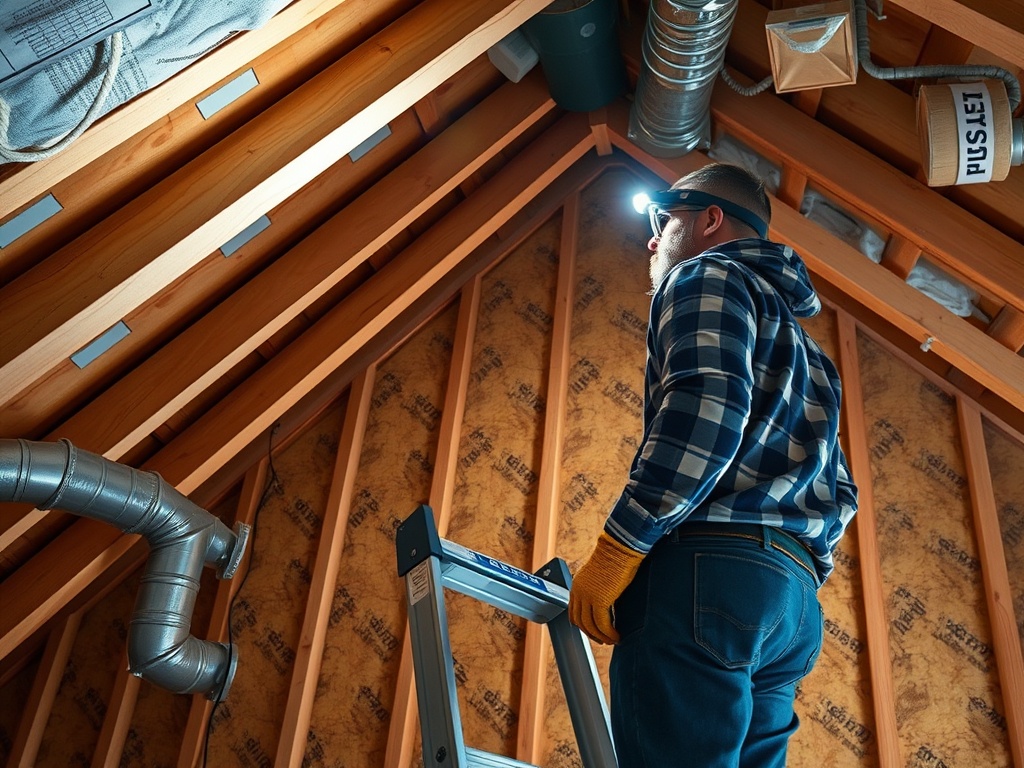
- Use a bright hands-free light, suitable clothing, gloves, and appropriate respiratory protection when conditions require it.
- Step only on designed walking surfaces or confirmed framing, never on ceiling drywall.
- Do not disturb suspect vermiculite insulation, mold-contaminated material, animal waste, or damaged wiring.
- Leave immediately if you find unsafe heat, poor air quality, structural instability, exposed electrical parts, standing water near electricity, or an animal hazard.
Decide Whether Entry Is Appropriate
Before climbing in, inspect the opening and visible area. Is the hatch stable? Is the ladder secure? Can you see a safe path? Are there exposed wires, damaged framing, standing water, strong odors, heavy pest activity, or insulation that may be hazardous to disturb?
OSHA's confined-space rules are written for workplaces rather than ordinary homeowner activity, but the hazard concepts are useful: restricted entry, difficult rescue, and potentially hazardous atmospheres can make an enclosed space dangerous (OSHA confined-spaces FAQ). Do not treat a difficult-to-enter space as routine just because it is part of a house.
Prepare Before Opening the Hatch
Wear clothing that protects skin from rough framing and insulation. Gloves and eye protection are sensible for dusty, unfinished spaces. Respiratory protection depends on the hazard; a disposable mask is not a universal solution for mold, asbestos, animal waste, or oxygen-deficient atmospheres.
Avoid entering during extreme attic heat. Temperatures under a roof can become dangerous quickly. Reschedule for a cooler period rather than trying to rush the inspection.
In an Attic, Know Where You Can Step
Ceiling drywall is not a walking surface. Move only on a properly installed walkway or on structural framing you can positively identify and safely access. Insulation can conceal joists, wiring, openings, and fasteners, making footing deceptive.
Do not balance on ducts, pipes, electrical cables, or storage boxes. Keep three points of contact while entering or leaving, and do not carry bulky items up the ladder. If the layout requires reaching across open ceiling bays or crawling over deep insulation, a professional inspection may be safer.
Do Not Disturb Suspect Vermiculite Insulation
Loose pebble-like vermiculite insulation in older attics deserves special caution. EPA advises homeowners to assume vermiculite insulation may be contaminated with asbestos and to leave it undisturbed rather than testing or handling it casually (EPA vermiculite insulation guidance).
If you see material that resembles vermiculite, stop before walking through, sweeping, vacuuming, or moving it. Disturbance can release fibers. Seek qualified asbestos guidance for evaluation and any work that could affect the material.
The same general principle applies to unknown insulation, deteriorated pipe wrap, old duct materials, or debris you cannot identify: observation is safer than disturbance until the material is understood.

What to Look for in an Attic
Moisture and roof leaks
Use your light to look for dark staining, damp sheathing, rusted fasteners, water tracks, compressed insulation, or daylight through roof defects. A moisture meter can help when used correctly, but one reading does not diagnose the source.
Condensation can resemble a roof leak. Air leakage from the living space, bathroom exhaust discharged into the attic, inadequate ventilation, and roof problems can all create moisture. The U.S. Department of Energy's Building Science Education resource explains that air sealing an existing attic focuses on controlling air leakage at the ceiling plane before insulation work (DOE attic air-sealing guidance).
Electrical conditions
Look without touching. Open junction boxes, damaged cable, scorched material, improvised extension cords, or wiring resting in unsafe locations should be evaluated by a qualified electrician. Do not move insulation around energized equipment unless you understand the system and safe clearances.
Ventilation and exhaust ducts
Check whether bathroom or kitchen exhaust ducts appear disconnected, crushed, or terminated into the attic instead of outdoors where required. Ducting and roof penetrations should be assessed against current local codes and manufacturer instructions.
Pests
Droppings, nesting material, gnaw marks, insects, carcasses, or strong urine odor can signal a pest problem. Avoid sweeping or vacuuming contaminated waste without understanding disease risks and appropriate cleanup procedures. Some infestations require pest-control or wildlife professionals.
What to Look for in a Crawl Space
Start from the opening. Check for standing water, wet soil, plumbing leaks, damaged vapor barriers, sagging insulation, wood decay, termite tubes, damaged ducts, and exposed wiring. Use a long-range light before crawling in.
Standing water near electrical components is a stop condition. So is visible structural collapse, strong chemical or sewage odor, active wildlife, or a space too tight to turn around safely.
Moisture patterns can come from plumbing, groundwater, grading, foundation drainage, humid outdoor air, or air-conditioning condensation. Do not assume a dehumidifier will solve the source. Diagnosis may require a plumber, drainage contractor, structural professional, or building-science specialist depending on what you find.
Do Not Create New Problems While Inspecting
Avoid compressing or displacing insulation unnecessarily. Do not disconnect ducts, pull on wires, move structural bracing, or open electrical boxes just to get a better look. In crawl spaces, do not tear vapor barriers with knees or tools.
Photograph conditions from a safe position so you can compare them later or show a professional. Include wide shots for context and closer images for detail. If there is a leak, record where the stain appears relative to roof penetrations, plumbing, or exterior walls rather than assuming the wet spot is directly below the source.
A seasonal home-maintenance routine can prevent inspections from becoming emergency searches. If you are also reviewing outdoor drainage or landscape grade, how to refresh an outdated landscape without starting over provides a useful reminder to address water movement before cosmetic changes.
Conditions That Should End the Inspection
Leave or do not enter if you encounter:
- suspected asbestos-containing vermiculite or other unidentified hazardous material;
- extensive visible mold or heavy contamination;
- exposed or damaged energized electrical components;
- standing water near electrical equipment;
- strong gas, sewage, chemical, or unexplained odors;
- extreme heat or symptoms such as dizziness, headache, or breathing difficulty;
- unstable framing, damaged stairs, or unsafe access;
- aggressive animals, snakes, wasp nests, or heavy rodent activity;
- a space so restricted that exit or rescue would be difficult.
Do not enter alone to investigate a condition that already appears hazardous from outside.
Keep Inspection Notes Actionable
Avoid diagnosing from photographs alone when safety or structure is involved. A stain can have several causes, and a sagging component may not be identifiable without understanding the framing system.
Know the Limit of a Homeowner Inspection
A safe homeowner inspection is primarily visual. Its purpose is to notice changes, document concerns, and decide when professional evaluation is warranted. It should not involve disturbing hazardous materials, repairing energized systems, crawling through unstable framing, or entering a space with uncertain air quality.
Use the safest vantage point that answers the question. If you cannot see enough without taking a significant risk, stop there. The cost of a professional inspection is easier to manage than a fall, exposure, electrical injury, or structural accident.
Informational note: Home and garden information is educational only and is not a substitute for professional structural, electrical, environmental, pest-control, HVAC, plumbing, occupational-safety, or legal advice. Follow local codes and qualified professional guidance for hazardous conditions.

Dr. Emily Watson
Location: Princeton, New Jersey Dr. Emily Watson is a quantum computing researcher and physicist who translates complex scientific concepts into accessible insights for business and technology leaders. Based in Princeton, home to leading research institutions, Emily holds a PhD in Physics from Princeton University and has published extensively on quantum algorithms and their applications. Her writing at Nano Write covers the science and business of quantum computing, from the physics of qubits to real-world use cases in cryptography, drug discovery, and optimization. Emily believes that quantum computing will be the next major technological revolution and she is committed to preparing leaders for that transformation. Outside of her research, Emily speaks at technology summits and advises startups at the intersection of physics and commerce.
More from Dr. Emily