A Beginner FAQ on Lawn and Garden Irrigation

Good irrigation is not about watering on a fixed calendar. It is about delivering water where roots can use it, checking what the soil and plants actually need, and adjusting for weather, soil, plant type, slope, and local watering rules. TL;DR Water based on plant…
Good irrigation is not about watering on a fixed calendar. It is about delivering water where roots can use it, checking what the soil and plants actually need, and adjusting for weather, soil, plant type, slope, and local watering rules.
TL;DR
- Water based on plant need and soil moisture rather than habit.
- Early-morning irrigation often reduces evaporation and gives foliage time to dry.
- Drip and microirrigation can be efficient for beds when designed and maintained correctly.
- Sprinklers need regular checks for leaks, clogged nozzles, poor pressure, and overspray.
- New plants and established landscapes usually need different watering routines.
What Does an Irrigation System Actually Do?
An irrigation system moves water from a supply to the root zone through hoses, pipes, emitters, sprinklers, or a combination of devices. Some systems are manual, while others use timers or weather-based controllers. The goal is not to make every square foot equally wet; it is to match water delivery to the plants and site.
EPA WaterSense advises homeowners to consider weather and plant needs, inspect systems for leaks or broken components, and avoid watering paved surfaces (EPA Watering Tips). Those basics matter more than sophisticated controls if the hardware is poorly placed or the schedule is wrong.
How Often Should I Water?
There is no universal interval. Soil texture, rainfall, temperature, wind, root depth, plant species, sun exposure, and establishment stage all change how quickly the root zone dries.
Instead of watering because a certain number of days have passed, check the soil. For small beds or containers, a finger, trowel, or soil probe can show whether moisture remains below the surface. For lawns, signs such as footprints that linger, dull color, or dry soil in the root zone can indicate water stress, but species and climate matter.
Local extension guidance is especially useful because turfgrass and seasonal watering recommendations differ sharply among regions. Local water agencies may also impose day-of-week or drought restrictions that take priority over general gardening advice.
Is Morning the Best Time to Irrigate?
Early morning is commonly recommended because temperatures and wind are often lower, which can reduce evaporation, and foliage has daylight hours to dry. Evening watering may be workable with drip systems that keep foliage dry, but prolonged leaf wetness can contribute to disease pressure on susceptible plants.
What Is the Difference Between Drip and Sprinkler Irrigation?
| Method | Common use | Strength | Watch for |
|---|---|---|---|
| Drip tubing | Beds, rows, containers | Applies water near roots | Clogged emitters, damaged tubing, poor placement |
| Micro-spray or bubbler | Shrubs, small zones, specialty beds | Flexible low-volume coverage | Overspray and uneven pressure |
| Pop-up spray | Small lawn zones | Simple, defined spray pattern | Wind drift, misting, blocked heads |
| Rotor | Larger lawn areas | Wider throw and slower rotation | Mismatched precipitation and poor head spacing |
| Hand watering | Containers, new plants, spot needs | Direct observation and control | Inconsistent duration and missed areas |
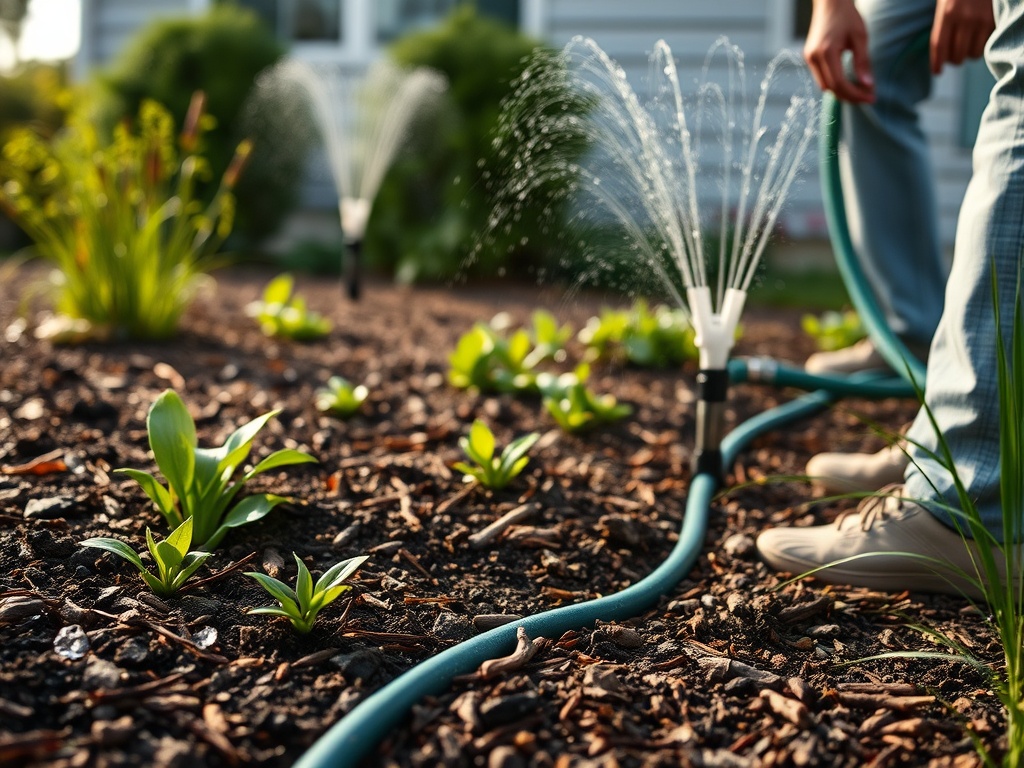
EPA describes microirrigation as a low-volume approach that can deliver water directly to landscaped areas with drip emitters or microsprays (EPA microirrigation overview). It can be efficient, but only when the system is zoned, placed, and maintained for the plants being watered.
How Do I Know How Much Water My Sprinklers Apply?
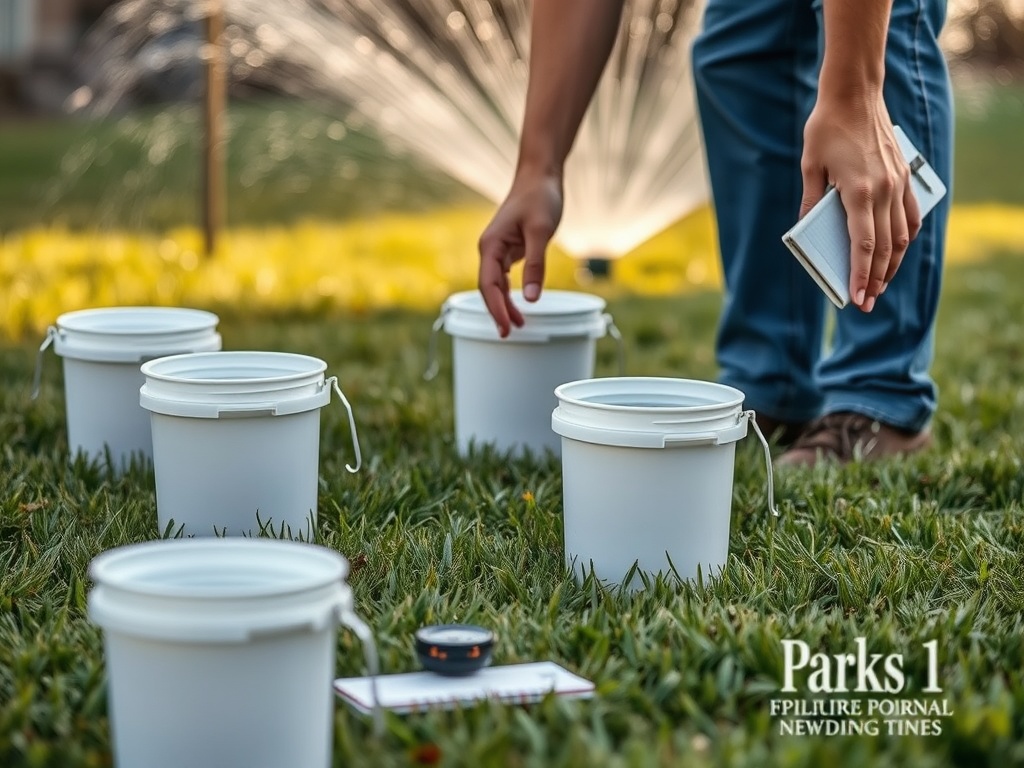
Do not rely only on the controller run time. Different heads and pressure conditions can apply very different amounts of water in the same number of minutes. A simple catch-can test can help you estimate distribution by placing several identical straight-sided containers in a zone, running the system for a measured period, and comparing collected depths.
Large differences between containers suggest uneven coverage, blocked heads, poor spacing, wind effects, or pressure problems. Adjust or repair the system before simply increasing run time, which can overwater the wettest areas.
Should Lawn and Garden Beds Be on the Same Zone?
Usually, plants with very different water needs are easier to manage on separate zones. Turf roots, mature shrubs, vegetable beds, new trees, and drought-adapted perennials may require different frequency, delivery method, and seasonal adjustment.
Hydrozoning means grouping plants with similar water needs. It can reduce the common problem of watering one plant correctly while overwatering its neighbor. When refreshing an older yard, consider irrigation zones before installing new plants; how to refresh an outdated landscape without starting over explains why utility and water decisions should come before decorative finishing work.
What Does a Smart Controller Change?
Weather-based and soil-moisture-based controllers can adjust irrigation using environmental information rather than repeating an unchanged schedule. EPA WaterSense labels qualifying weather-based and soil-moisture-based controllers that meet efficiency and performance criteria (WaterSense labeled controllers).
A smart controller cannot repair a leaking valve, move a buried emitter, or correct a zone that mixes incompatible plants. Treat automation as one part of the system, not a substitute for inspection.
Why Is Water Running Onto the Sidewalk?
Common causes include misaligned spray heads, excessive run time, compacted soil, steep slopes, high pressure, and an application rate faster than the soil can absorb. Fix mechanical overspray first. On slopes or slow-infiltrating soil, shorter irrigation cycles separated by soak periods may reduce runoff when supported by local guidance and controller capabilities.
Mulch, soil improvement, plant selection, and lawn shape can also influence water demand. A sustainable garden strategy may reduce irrigation needs over time; the eco-friendly gardening FAQ covers broader choices such as soil health, plant selection, compost, and reduced inputs.
How Should I Water New Plants?
Newly installed plants generally need closer moisture monitoring because their roots have not yet expanded through the surrounding soil. Water the root ball and adjacent soil as needed for establishment, then gradually transition toward a schedule appropriate for the species and site.
Do not assume a newly planted tree benefits from frequent shallow lawn irrigation. Root-ball size, soil interface, weather, and drainage can all affect moisture. Local extension recommendations for tree and shrub establishment are more useful than a single national schedule.
What Maintenance Should I Do Each Season?
At the beginning of active irrigation, run each zone while you can see it. Look for broken heads, geysers, clogged emitters, tilted sprinklers, leaking connections, misting, and water hitting pavement or buildings. Clean filters and emitters as specified by the manufacturer.
During the season, adjust schedules as weather and plant demand change. After mowing, construction, aeration, or bed work, check that components were not damaged. In freezing climates, follow local and manufacturer guidance for winterization; improper blowout procedures can be hazardous and may require a professional.
Do I Need Irrigation for Herbs and Vegetables?
Edible gardens need consistent moisture appropriate to the crop and growth stage, but the delivery method can vary. Drip lines or soaker hoses can keep water near the soil and reduce wet foliage, while hand watering works well for containers and close observation.
If herbs are a major part of the garden, combine sensible moisture management with harvesting practices that preserve new growth. See how to harvest herbs for more regrowth for species-aware cutting strategies.
Use Observation as Your Irrigation Controller
Start simple: inspect, water only where needed, and learn how long the root zone stays moist after each cycle. Then improve zoning, emitters, and automation if they solve a real problem.
A well-managed system should respond to the landscape rather than forcing the landscape to fit a rigid schedule. Review it after plant changes, repairs, major weather shifts, and seasonal transitions.
Informational note: Home and garden information is educational only and is not a substitute for professional horticultural, pest-control, structural, electrical, plumbing, or legal advice. Follow local water restrictions, codes, product labels, and manufacturer instructions.

Dr. Emily Watson
Location: Princeton, New Jersey Dr. Emily Watson is a quantum computing researcher and physicist who translates complex scientific concepts into accessible insights for business and technology leaders. Based in Princeton, home to leading research institutions, Emily holds a PhD in Physics from Princeton University and has published extensively on quantum algorithms and their applications. Her writing at Nano Write covers the science and business of quantum computing, from the physics of qubits to real-world use cases in cryptography, drug discovery, and optimization. Emily believes that quantum computing will be the next major technological revolution and she is committed to preparing leaders for that transformation. Outside of her research, Emily speaks at technology summits and advises startups at the intersection of physics and commerce.
More from Dr. Emily