The Best Use Cases for AR and VR Workouts Right Now

Augmented reality (AR) and virtual reality (VR) are useful fitness tools when the technology changes behavior in a helpful way: it makes a person move more, repeat sessions more consistently, or practice a task with immediate visual feedback. Their strongest use case is not “the…
Augmented reality (AR) and virtual reality (VR) are useful fitness tools when the technology changes behavior in a helpful way: it makes a person move more, repeat sessions more consistently, or practice a task with immediate visual feedback. Their strongest use case is not “the metaverse replaces the gym”; it is making certain forms of activity more engaging or easier to deliver.
TL;DR AR and VR workouts are most useful right now when immersion, game mechanics, or visual guidance makes movement easier to start and more engaging to repeat. They can support aerobic exercise, active gaming, skill practice, and some rehabilitation contexts, but they are not a complete replacement for progressive resistance, outdoor activity, or individualized clinical care.
The practical question is where immersion adds value and where a simpler workout is still better.
Use case 1: making cardio feel more like a game
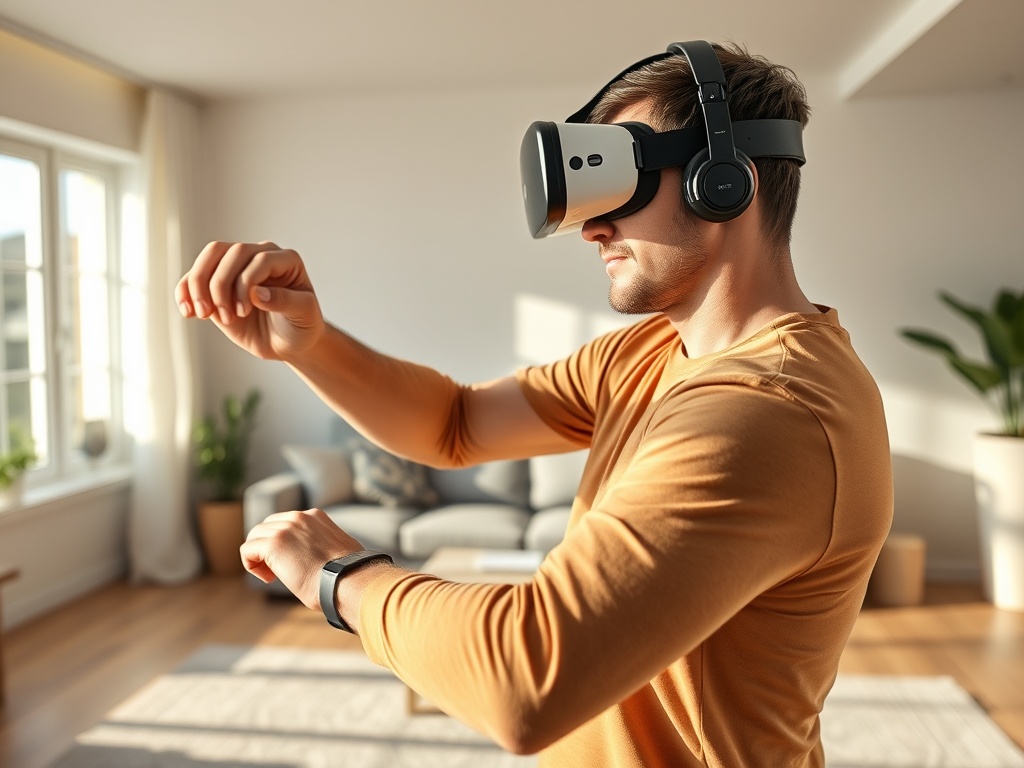
VR boxing, rhythm games, dance-style sessions, and active games can generate sustained movement without feeling like a traditional treadmill workout. The current HHS Move Your Way activity list explicitly includes active video games among the activities people can use in a weekly plan, which supports the basic idea that screen-based exercise can still count as physical activity when it makes you move at an appropriate intensity.
A 2025 randomized controlled trial in college students evaluated an immersive VR exercise intervention and measured both psychological and physiological outcomes. See the immersive VR exercise trial for the study details. One trial in a specific population does not prove that every VR game improves fitness, but it adds to the evidence that immersive exercise can be more than passive entertainment.
Use case 2: reducing boredom in indoor conditioning
Indoor cardio can be effective but monotonous. Virtual courses, targets, leaderboards, and reactive environments can give a session more structure. For people who dislike watching a clock, a game objective may create a reason to keep moving.
This is primarily an adherence advantage. If the game keeps intensity too low for your goal, the session may be enjoyable without providing the training dose you intended. Use heart rate, talk test, pace, or perceived exertion to confirm that the workout matches the target.
If you prefer simple equipment, compare the technology with the options in the best conditioning tools for home workouts. A jump rope or stationary bike may deliver the same conditioning goal with less setup.
Use case 3: guided movement and skill cues
AR can overlay prompts, routes, targets, or form cues onto the real environment. That can be useful for pacing, navigation, or guided exercise sequences. VR can provide a controlled environment for practicing movement patterns or responding to visual targets.
The limitation is that visual feedback is only as good as the tracking system and exercise design. A headset may know where your hands and head are while estimating the rest of the body. That is not the same as a coach observing joint position, load tolerance, and technique in a real three-dimensional space.
For strength training, AR or VR is best treated as a coaching or engagement layer around the program, not as the progression model itself. You still need a way to increase resistance or difficulty. If immersive sessions are being used mainly to support weight management, pair them with the sustainable food framework in losing weight without turning every meal into math rather than relying on estimated headset calorie burn.

Use case 4: supervised rehabilitation and therapeutic exercise
VR has also been studied in rehabilitation settings where repetition, feedback, and engagement can be valuable. A 2025 randomized controlled trial evaluated VR-based exercise in people with lumbar disc hernia alongside routine care; the VR rehabilitation trial provides one example of a clinical use case.
That does not mean a consumer headset should be used to self-treat back pain. Clinical populations need screening, appropriate exercise selection, and professional oversight. The technology may be part of a treatment delivery system, while the clinical decision-making remains human.
Use case 5: keeping low-barrier movement interesting
For someone who is currently inactive, a fun 15-minute active game may be more useful than a theoretically optimal 45-minute workout they never start. AR walking games can also turn ordinary steps into exploration or task completion.
This is where “best” becomes personal. If immersive fitness helps you accumulate regular activity without creating pain, motion sickness, or schedule friction, it may earn a place in the routine. If the setup is cumbersome, the headset is uncomfortable, or you stop after the novelty fades, the simpler option wins.
Where AR and VR still fall short
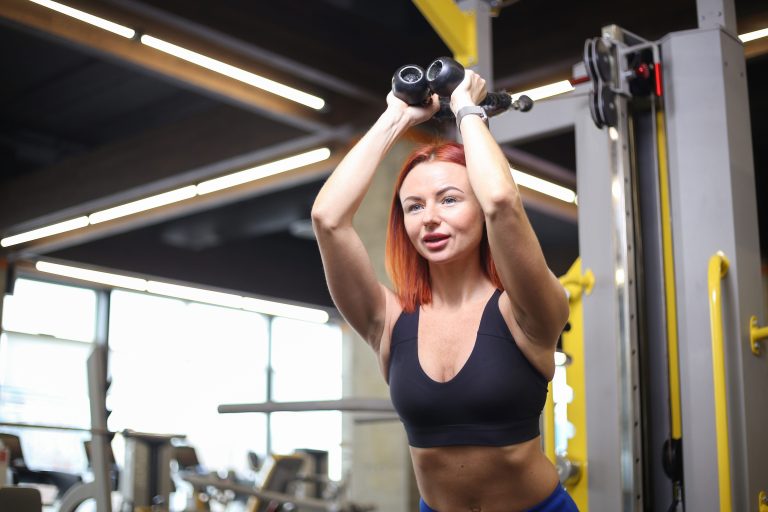
First, progressive resistance is difficult to reproduce without actual external load. Some VR games create muscular fatigue through repeated arm movements, but that is not equivalent to a structured strength program with measurable resistance progression.
Second, motion sickness, heat, headset pressure, visual fatigue, and awareness of the physical environment can limit sessions. Clear floor space matters because the immersive display can reduce your awareness of furniture, walls, pets, or other people.
Third, calorie-burn and performance estimates should be treated cautiously. Consumer devices can provide useful trends, but they are not laboratory metabolic measurements.
Finally, privacy matters. Immersive systems can collect movement, account, and sensor data. Review device settings and data practices rather than assuming that a fitness app is only recording exercise.
How to decide if immersive fitness belongs in your plan
Ask four questions: Does it make you move at the intensity you need? Do you enjoy it enough to repeat? Can you use it safely in your space? Does it complement rather than replace important training you still need?
If the answer is yes, schedule it like any other workout and track the actual behavior—minutes, sessions, effort, or game-specific work—not just badges. If the novelty fades, you will know whether the tool is still producing useful activity.
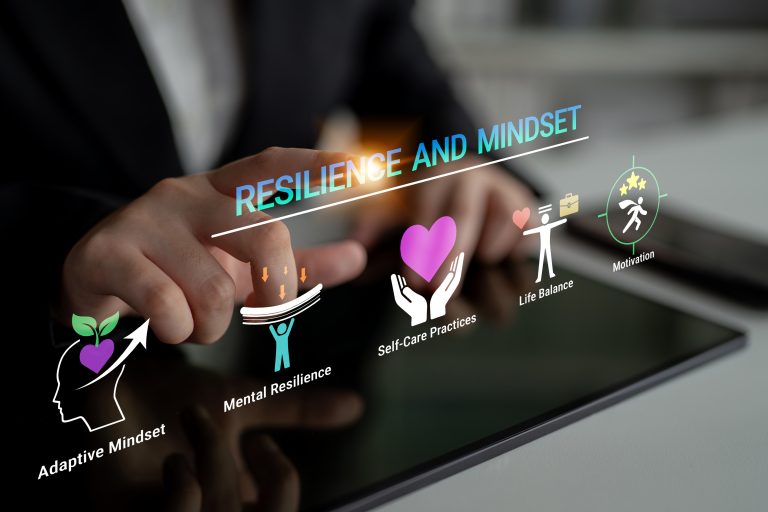
The same principle applies to motivation more broadly. The strategies in building resilience when progress feels slow can help you distinguish a temporary dip in excitement from a routine that truly needs redesign.
Quick FAQ about immersive workouts
Can a VR workout count as cardio?
Yes, if the activity keeps you moving at an aerobic intensity appropriate for your goal. The headset itself does not make the session cardio; your actual movement and effort do.
Is AR better than VR for outdoor exercise?
Neither is universally better. AR can preserve awareness of the real environment while adding prompts or navigation, whereas VR is more immersive and usually better suited to controlled indoor spaces. Safety and distraction matter outdoors, so digital cues should never override traffic, terrain, or situational awareness.
Can immersive fitness replace resistance training?
Usually not if your goal requires progressive strength. Active games can fatigue muscles, but structured resistance training gives you clearer ways to increase external load and track force-producing capacity over time.
Where immersive fitness fits best
AR and VR are strongest when they remove boredom, add feedback, or create a compelling reason to move. They are weaker when they are expected to replace all strength progression, outdoor movement, or individualized healthcare.
Use immersive workouts for the jobs they do well: active gaming, indoor cardio, guided practice, and selected supervised therapeutic contexts. Keep the rest of the program grounded in measurable training principles. The technology can make exercise feel different; the body still adapts to the work you actually perform.

Dr. Sophia Alvarez
<b>Location: </b>Chicago, Illinois Dr. Sophia Alvarez is a computational biologist and health tech researcher exploring the application of data science to personalized medicine and drug discovery. Based in Chicago, home to world-class medical and research institutions, Sophia holds a PhD in Computational Biology and has worked on projects ranging from genomics to clinical trial optimization. Her writing at Nano Write covers the intersection of healthcare, data, and technology, from AI in diagnostics to the business of healthtech startups. Sophia is passionate about making healthcare more precise and more accessible, and her articles reflect a deep understanding of both the science and the human dimensions of medicine. Outside of her research, Sophia advises healthtech startups and speaks at conferences on the future of healthcare.
More from Dr. Sophia