How to Build Upper-Body Strength as a Woman Who Has Never Trained Before

Building upper-body strength from zero is mostly a skill-and-progression problem, not a gender-specific mystery. The first goal is to learn a few reliable movement patterns, practice them often enough to improve, and increase the challenge gradually without turning every set into a maximum-effort test. TL;DR…
Building upper-body strength from zero is mostly a skill-and-progression problem, not a gender-specific mystery. The first goal is to learn a few reliable movement patterns, practice them often enough to improve, and increase the challenge gradually without turning every set into a maximum-effort test.
TL;DR A woman who has never strength-trained does not need a special “female” exercise system. Start with a small set of pushing, pulling, and carrying movements that can be performed with stable technique, train them consistently, and progress load or repetitions gradually. Confidence and skill should rise alongside the weight.
For a new lifter, the best program is one that feels understandable on day one and measurable by week six.
Start with four upper-body movement patterns
You can cover most beginner needs with a horizontal push, horizontal pull, vertical push, and vertical pull. Add a carry or simple arm exercise if time and interest allow.
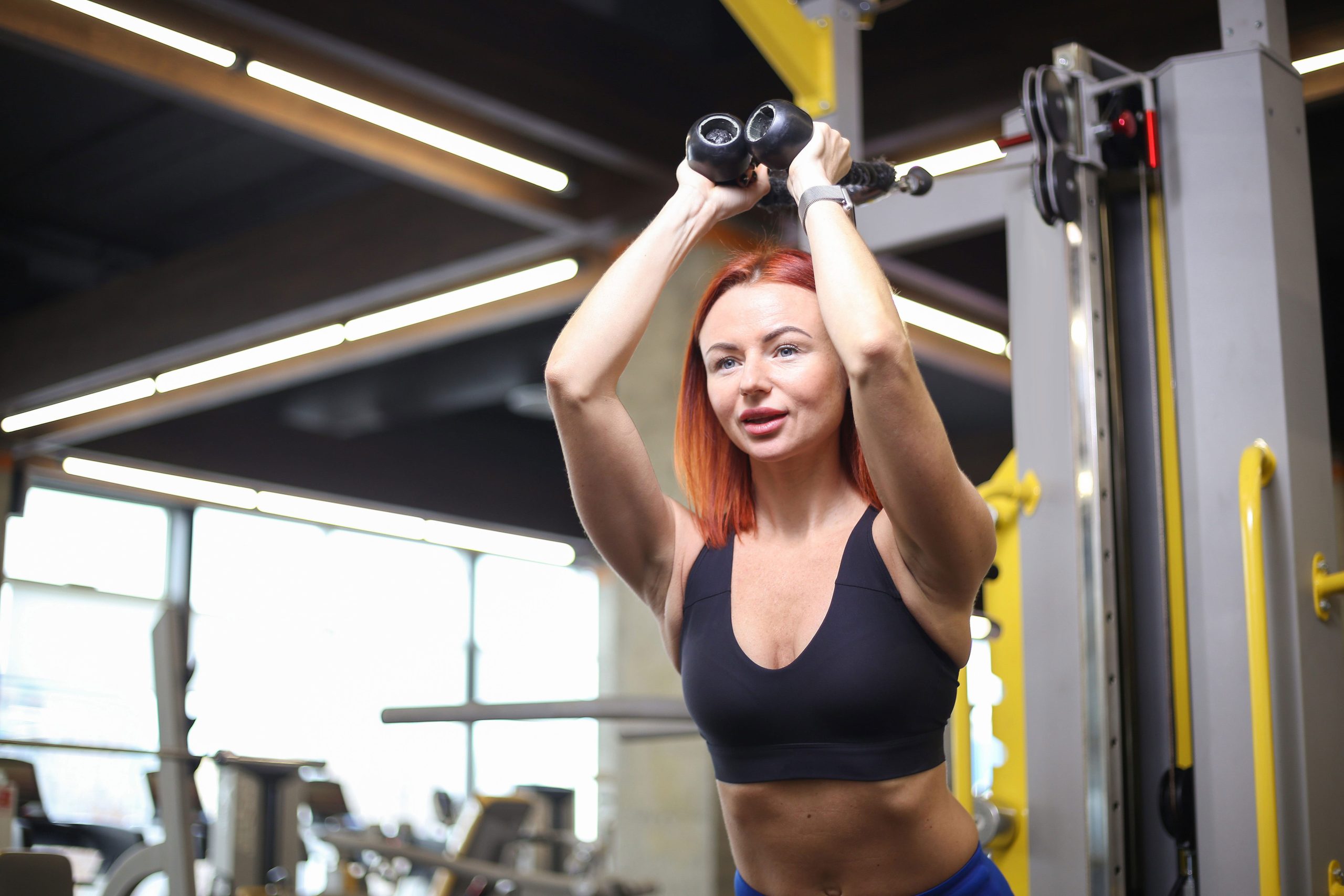
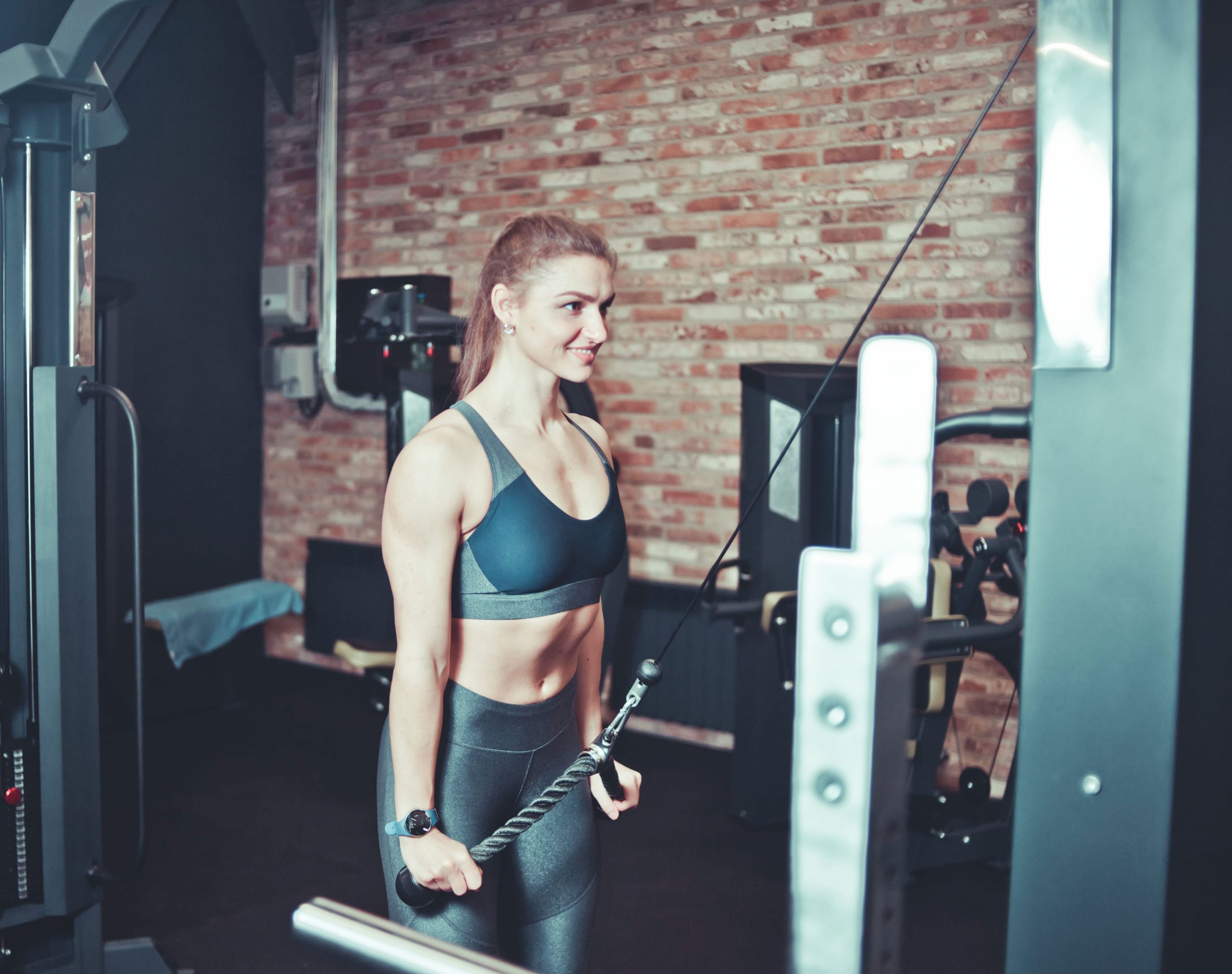
Examples include a machine chest press or incline push-up for horizontal pushing; a cable, band, or machine row for horizontal pulling; a dumbbell or machine overhead press for vertical pushing; and an assisted pull-up or lat pulldown for vertical pulling.
Machines are not “less real” strength training, and free weights are not automatically better. Choose the version that lets you control the movement, use a comfortable range of motion, and progress in small steps.
The 2026 ACSM resistance-training guidance highlights that many forms of resistance training are effective and that consistent participation matters more than unnecessary complexity. That is especially relevant when you are learning.
Train twice a week before adding more days
Two well-spaced upper-body or full-body sessions can provide enough practice for a beginner while leaving time to recover and learn technique. Current CDC physical activity guidance includes muscle-strengthening work on at least two days each week as part of the adult activity recommendations.
You do not need to create a six-day split to “take it seriously.” More training days can be added later if they fit your goals and recovery, but frequency is useful only when the sessions remain productive.
A simple starting structure is two or three sets of each main movement at a load that allows several controlled repetitions before technique would break down. Exact repetition targets can vary; the important part is that the set is challenging enough to train the movement without requiring repeated failure.
Learn effort before chasing heavy numbers
New lifters often stop either too early because the set feels unfamiliar or too late because they assume every set must be maximal. Use a simple effort cue: finish most working sets feeling that you could have completed a few more good repetitions.
As your technique becomes repeatable, effort estimates become more useful. Keep notes on load, repetitions, and how many solid repetitions you think remained. The framework in using training logs to get stronger can help turn those notes into progression rather than guesswork.
Progress by repetitions, load, or exercise difficulty
Pick a repetition range and keep the same exercise long enough to learn it. When you can complete the planned sets near the top of the range with stable technique and manageable effort, increase the load slightly. If the available weight jump is too large, add repetitions first.
A 2026 pilot study in untrained women compared unilateral, bilateral, and asymmetrically loaded upper-body resistance training over 10 weeks. Participants improved maximal strength across the training approaches, supporting the broader point that several loading styles can work when training is structured and repeated. See the untrained-women resistance-training study for the specific design and limitations.
Do not read a small study as proof that one method is best. For a beginner, the practical lesson is that you have options.
Do not avoid pulling and pressing because of body-image myths
Some women hesitate to train the upper body because they fear becoming “too bulky” quickly. Meaningful muscle growth requires sustained training and is influenced by genetics, nutrition, training volume, and time. A few weeks of basic strength work will not suddenly produce an extreme physique.
Others focus almost entirely on light arm exercises while avoiding compound pushes and pulls. Isolation work is fine, but rows, presses, pulldowns, and push-up variations provide efficient practice for larger movement patterns.
Your program should be chosen around function, preference, and goals rather than stereotypes about what women are “supposed” to train.
What the 2026 resistance-training update changes for beginners
The current industry conversation is moving away from the idea that effective resistance training requires a complicated split, one “best” equipment type, or repeated training to failure. The 2026 ACSM update places more emphasis on consistent resistance training and matching the variables to the goal. For a woman starting from zero, that means the program can be simpler than social media often suggests.
The implication is practical: choose movements you can repeat, use enough resistance to make the sets challenging, and progress when your current work is clearly manageable. Advanced methods can wait until you have a reason to use them.
Make the first six weeks deliberately simple
Use the same core exercises for several weeks unless a movement causes pain or clearly does not fit your equipment. Repetition builds skill. A sample structure might include a press, row, pulldown, overhead press, and carry, with one optional arm exercise.
Warm up with lighter versions of the same movements rather than a long unrelated routine. Rest long enough between sets that breathing is under control and you can perform the next set with good technique. If the last repetitions become rushed, reduce the load or stop the set.
If a wearable reports low readiness, do not automatically skip. Use the multi-signal approach in training readiness signals and let the warm-up provide additional information.
Know when to ask for coaching or medical guidance
A qualified coach can be useful if you are unsure how to set up equipment, choose starting loads, or perform a movement safely. Medical or rehabilitation guidance is more appropriate when you have a significant injury, persistent pain, neurological symptoms, or a condition that changes exercise safety.
Do not confuse ordinary muscle fatigue with pain that worsens as you continue. Strength training should challenge you, but a beginner program should not require ignoring warning signs to prove commitment.
Your first upper-body progression
Choose four core patterns, train them consistently, and record what you do. Give technique several weeks to become familiar. Add repetitions or small amounts of load only when the current work is controlled.
The first milestone is not a particular dumbbell size or push-up number. It is reaching the point where you can walk into a session, set up each exercise confidently, understand how hard a set should feel, and know what small progression you are aiming for. That competence is what makes long-term strength possible.

Dr. Sophia Alvarez
<b>Location: </b>Chicago, Illinois Dr. Sophia Alvarez is a computational biologist and health tech researcher exploring the application of data science to personalized medicine and drug discovery. Based in Chicago, home to world-class medical and research institutions, Sophia holds a PhD in Computational Biology and has worked on projects ranging from genomics to clinical trial optimization. Her writing at Nano Write covers the intersection of healthcare, data, and technology, from AI in diagnostics to the business of healthtech startups. Sophia is passionate about making healthcare more precise and more accessible, and her articles reflect a deep understanding of both the science and the human dimensions of medicine. Outside of her research, Sophia advises healthtech startups and speaks at conferences on the future of healthcare.
More from Dr. Sophia