How to Use Training Readiness Signals Without Overreacting

A readiness score can make recovery feel precise, but the number is only an estimate built from whatever the device or questionnaire measures, so use readiness signals to inform training rather than outsource the decision. One poor sleep score or low heart-rate-variability reading does not…
A readiness score can make recovery feel precise, but the number is only an estimate built from whatever the device or questionnaire measures, so use readiness signals to inform training rather than outsource the decision. One poor sleep score or low heart-rate-variability reading does not automatically mean you need a rest day.
TL;DR Training-readiness signals are most useful as a pattern across several inputs—sleep, soreness, fatigue, motivation, resting measures, and warm-up performance—not as a single score that decides whether you are allowed to train. Establish your own baseline, look for agreement among signals, and make small adjustments when several indicators move in the same direction.
The better question is whether several signals agree that your normal training dose is unusually costly today.
Separate subjective and objective signals
Subjective signals include sleep quality, fatigue, muscle soreness, stress, mood, motivation, and a simple “how ready do I feel?” rating. Objective or device-derived signals can include resting heart rate, heart rate variability (HRV), sleep duration, skin temperature, movement, or performance in a standardized test.
Neither category is automatically superior. Subjective reports can capture stress and soreness that a wearable cannot see. Objective measures can provide repeated physiological data, but they are sensitive to device quality, measurement conditions, algorithms, illness, alcohol, temperature, and other factors.
Research validating a brief training-distress and readiness measure found that self-reported training distress changed alongside experimentally manipulated training and performance. That does not make a questionnaire perfect; it shows that subjective information can be meaningful when collected consistently.
Build a personal baseline before using traffic-light rules
Readiness is relative. A resting heart rate of 58 beats per minute may be normal for one person and unusual for another. The same applies to HRV, sleep duration, and soreness.
Collect at least a couple of weeks of normal data before creating hard thresholds. Note what your readings look like after easy days, hard days, poor sleep, travel, and illness. The goal is to understand your normal variation rather than comparing yourself with somebody else’s wearable screenshot.
If you already log resistance training, add only the readiness fields that explain performance. The system in using training logs to get stronger works better when recovery notes stay short enough to maintain.
Use agreement among signals instead of one red flag
A simple decision framework is to look for clusters.
- Mostly normal: Sleep is typical, soreness is low, motivation is normal, and warm-ups move as expected. Train as planned.
- Mixed: One or two signals are off, but performance is normal. Keep the session and consider a small reduction in volume or intensity only if the first working sets confirm the concern.
- Several signals clearly worse: Poor sleep, unusually high soreness, low motivation, elevated resting heart rate, and sluggish warm-ups all point the same way. An easier session or recovery day may be reasonable.
This is an interpretation framework, not a medical rule. Symptoms such as chest pain, fainting, severe shortness of breath, acute injury, or signs of significant illness are different from routine “readiness” and should not be managed by a training score.

Treat HRV as one input, not a verdict
HRV reflects beat-to-beat variation and is influenced by autonomic nervous system activity. Athletes and wearables often use it as a recovery signal, typically compared with an individual baseline.
An eight-week cluster-randomized study of professional runners adjusted training using daily HRV and found some performance differences compared with traditional training, but the sample was very small. The HRV-guided training trial is useful because it shows both the promise and the limits of HRV-guided programming.
For everyday training, measurement consistency matters. If you use morning HRV, take it under similar conditions and avoid interpreting a single unusual value. A multi-day trend paired with how you feel and perform is more useful than one red indicator.
Sleep deserves attention, but not panic
Sleep affects how people feel, recover, and perform, yet one short night does not affect every workout the same way. A cohort study in professional cricketers linked lower perceived sleep quality with lower readiness and higher soreness, stress, and fatigue; see the sleep and athlete well-being study. The population was specific, so it should not be treated as a universal prediction for every recreational trainee.
Use sleep as context. If you slept badly but feel normal and warm up well, the day may still be productive. If poor sleep repeats across several nights and training quality drops, the pattern deserves a program or lifestyle adjustment.
Warm-up performance can be your final check
Before changing a session based on a morning score, let the first 10 to 15 minutes provide more information. Does your normal mobility feel unusually restricted? Does a familiar submaximal load move much slower? Is your heart rate or breathing response unexpectedly high for an easy effort?
A standardized warm-up is useful because it gives you a repeatable comparison. Keep the early work easy enough to observe rather than turning the “test” into another fatigue source.
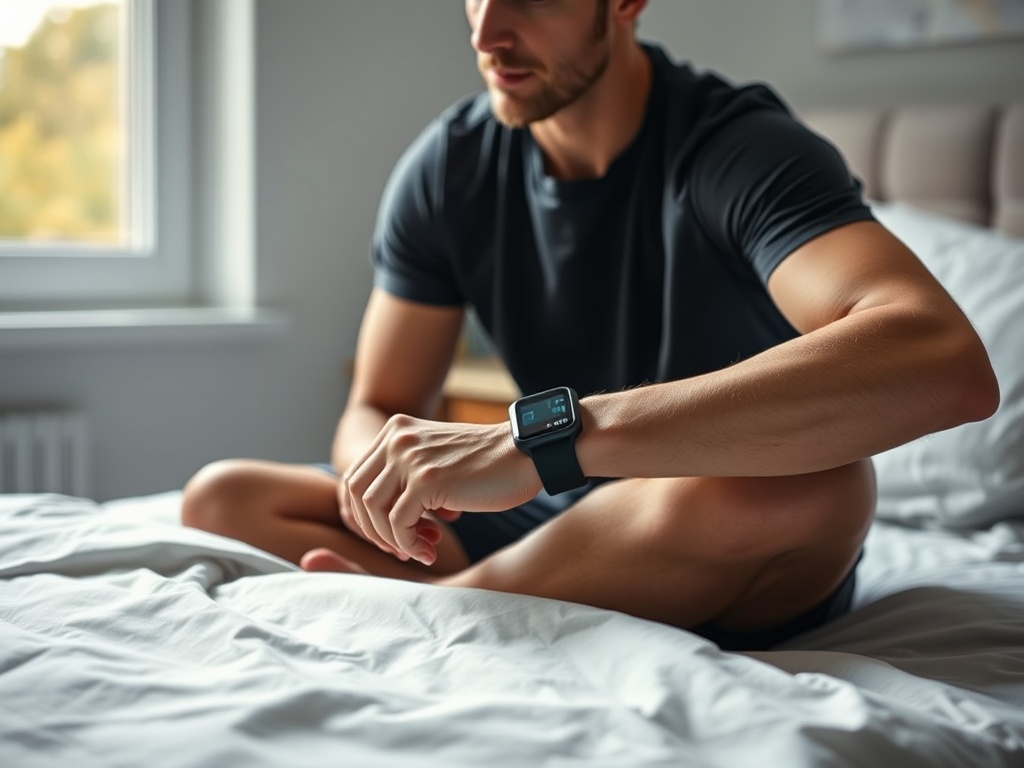
This also protects against psychological overreaction. Seeing a low wearable score can change expectations before training begins. A normal warm-up can remind you that the body you have in front of you matters more than the color of an app tile.
Common readiness mistakes
The first is changing the plan every day. Constantly swapping hard and easy sessions based on noisy inputs can erase the structure that produces adaptation. The second is treating a proprietary score as medically validated for every user. Different devices weight inputs differently, and algorithms can change.
The third is ignoring persistent symptoms because the score is green. Wearables are not diagnostic tools. The fourth is using readiness to avoid every uncomfortable session; some normal fatigue is part of training.
If your broader goal is building fitness over time, compare readiness with longer-term capacity measures such as those discussed in fitness age versus chronological age. Daily recovery and long-term fitness answer different questions.
Let trends guide the day
Use readiness signals to make small decisions: keep the plan, reduce one or two sets, lower intensity, swap a hard interval session for easy aerobic work, or take a full recovery day when several indicators and symptoms support it.
Then record what happened. If a “low-readiness” day still produced normal performance, that teaches you something about your baseline. If several poor signals repeatedly precede bad sessions, your monitoring system has become more useful. The goal is not perfect prediction; it is better calibration between the plan and the person doing it.

Dr. Sophia Alvarez
<b>Location: </b>Chicago, Illinois Dr. Sophia Alvarez is a computational biologist and health tech researcher exploring the application of data science to personalized medicine and drug discovery. Based in Chicago, home to world-class medical and research institutions, Sophia holds a PhD in Computational Biology and has worked on projects ranging from genomics to clinical trial optimization. Her writing at Nano Write covers the intersection of healthcare, data, and technology, from AI in diagnostics to the business of healthtech startups. Sophia is passionate about making healthcare more precise and more accessible, and her articles reflect a deep understanding of both the science and the human dimensions of medicine. Outside of her research, Sophia advises healthtech startups and speaks at conferences on the future of healthcare.
More from Dr. Sophia